Caffeine works — until it doesn't. If you're tired of the jitters, the crash, or just needing more and more coffee to feel normal, you're not alone. These seven OptiMind options are built around sustained energy rather than relying on stimulants as the only tool in the box. Here's what each one is, who it's for, and how to pick the right fit. New to the category? Start with our guide to what nootropics are.
1. OptiMind Mental Energy Special Offer
This is OptiMind's subscription entry point. It's designed for people who want clean cognitive energy on a recurring basis without committing to a larger upfront order.
The case for it is simple. Subscription pricing means you never run out mid-week, and consistent daily use is exactly how the formula is designed to work. Ingredients like Synapsa® Bacopa Monnieri and Huperzine A are studied over sustained use rather than as single doses — they don't hit like a shot of espresso on day one, but they are formulated to support focus and recall with consistent daily use over several weeks. That's how the research on Bacopa is structured too: most trials run 12 weeks of daily dosing.
The formula pairs natural caffeine from green coffee bean with GABA and L-Theanine. That combination is intended to support calm, even alertness rather than a spike. The same workload, the same day — just approached more clearly.
One honest caveat: this product does contain caffeine, so it's not fully stimulant-free. But the caffeine dose is measured and balanced with GABA, which makes the experience meaningfully different from a strong cup of coffee. If you're sensitive to caffeine, start with one capsule and see how you respond before moving to the full two-capsule serving.
If you want to understand how the individual ingredients in this formula interact, the OptiMind nootropic ingredients database breaks down each active with studied dosing ranges and mechanisms.
2. OptiMind Brain Supplement - 32 Capsules
The 32-capsule option is the right starting point if you want to try OptiMind before committing to a larger supply. Sixteen days of the two-capsule daily serving — enough time to get a feel for the formula and start building toward the cumulative effects.
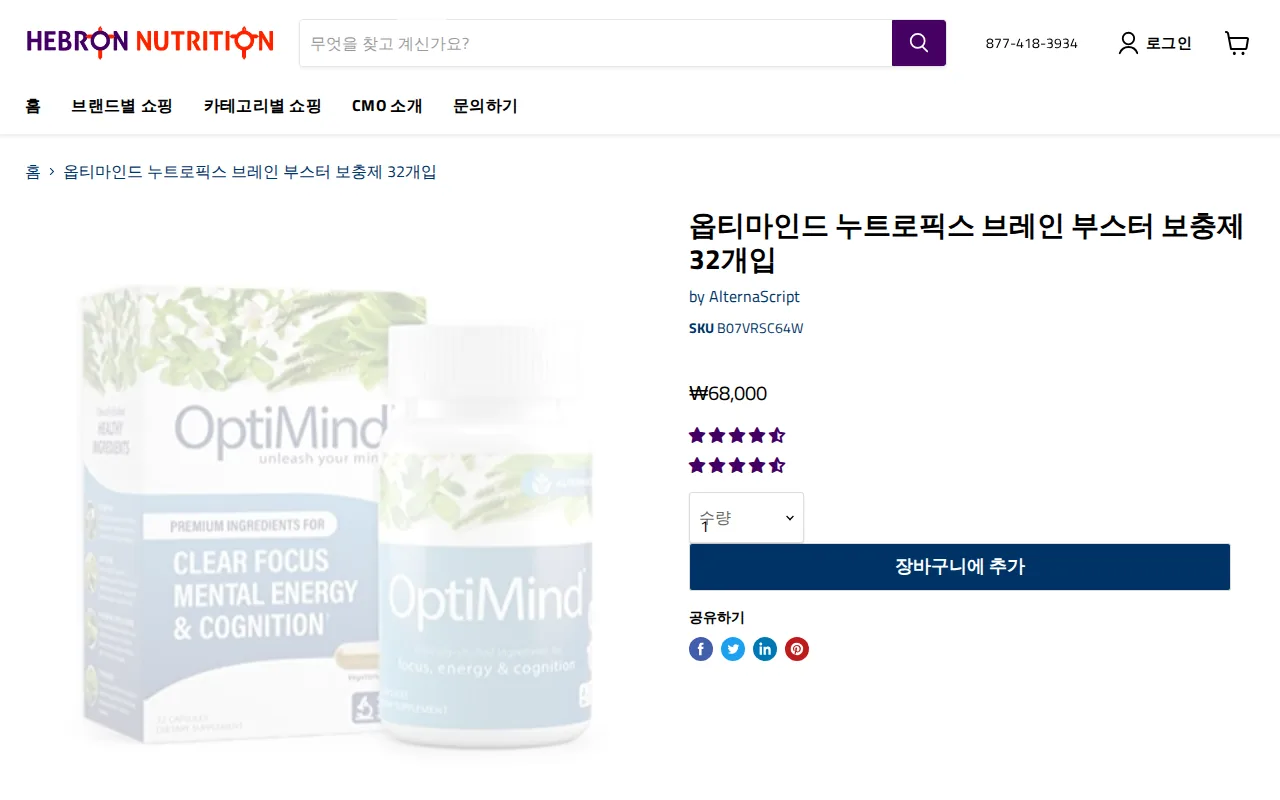
This size works well for people who are cutting back on heavy caffeine use. Reducing coffee abruptly can be uncomfortable, and a 32-capsule bottle gives you a low-stakes trial run where you can taper coffee while introducing a more balanced formula, without buying three months of supply upfront.
The 12-ingredient formula is identical across all OptiMind sizes. Every serving delivers Vitamin D, Vitamin B1, Vitamin B12 as Methylcobalamin, and Calcium alongside the Focus Blend: Synapsa® Bacopa Monnieri, L-Taurine, Phosphatidylserine, Natural Caffeine from green coffee bean, GABA, L-Tyrosine, Alpha Lipoic Acid, and Huperzine A. Every active is named on the label. No proprietary blends hiding doses.
The limitation here is per-unit cost. At the 32-capsule size, you're paying more per serving than you would with a larger format. Think of it as a trial investment rather than a long-term supply strategy.
3. OptiMind® Brain Supplement - 64 Count
The 64-count bottle is the most usable choice for anyone who's already tried OptiMind and wants to keep going. Thirty-two days of the full daily serving — just over a month's supply — at a better per-capsule rate than the 32-count.
This is the size that makes the most sense if your goal is sustained cognitive support rather than a quick test. The ingredients that matter most for long-term energy — Bacopa for memory support, Phosphatidylserine for cell-membrane health, Huperzine A for the acetylcholine system — are all studied over extended use. You won't get the full picture from two weeks. A 64-count bottle gets you far enough into consistent use that you can actually evaluate what's changed.
B vitamins in the formula (B1 and B12) support the body's normal energy metabolism. Vitamin B12, delivered here as Methylcobalamin (a highly bioavailable form), supports normal neurological function and red blood cell formation, and maintaining healthy B12 status helps support everyday energy levels.
Good fit for: professionals or students who've confirmed OptiMind works for them and want a steady monthly supply without jumping to the larger packs. The 64-count hits a usable middle ground between trial size and bulk commitment.
4. OptiMind® Brain Supplement - 96 Count
The 96-count is the best per-serving value in the OptiMind lineup. Forty-eight days of the full two-capsule daily serving. If you're in this for the long haul — and with nootropics, the long haul is where results actually live — this is the format that makes financial sense.
Think about it this way: the ingredients that build cumulatively, Bacopa and Huperzine A especially, are studied over 8 to 12 weeks of daily use. Buying a 48-day supply means you're set up to actually run the experiment properly. You're not scrambling to reorder mid-trial or breaking consistency because a shipment is delayed.
People with high physical output often want more cognitive support, not less. Intense training uses up B vitamins and magnesium faster than a sedentary routine. The 96-count removes the friction of reordering every few weeks, which matters when consistency is the whole point.
The honest caveat: a larger upfront order is a real commitment if you haven't tried OptiMind before. Start with the 32-count to confirm it works for you, then move up once you know it's worth the investment. Don't buy bulk on faith.
5. OptiMind® Brain Supplement — 1-Pack
The 1-Pack is a single bottle of OptiMind's core formula — the same 12 clinically studied ingredients, the same transparent label, no subscription required. It's the right choice if you want to try the product once without any recurring commitment attached.
What separates OptiMind from generic energy supplements is the formula's architecture. Rather than stacking stimulants, it targets three systems: the energy system (natural caffeine, L-Taurine, GABA), the focus system (L-Tyrosine, Phosphatidylserine), and the memory system (Synapsa® Bacopa, Huperzine A). Each supports a different aspect of cognitive performance, and they are formulated to work together rather than just pushing your nervous system harder.
L-Tyrosine is worth calling out specifically. It's an amino acid the body uses to produce dopamine and norepinephrine — neurotransmitters involved in drive, motivation, and focus under pressure. Demanding periods draw on these, and L-Tyrosine helps support them. It's one of the reasons OptiMind is formulated to feel different from a simple caffeine supplement: the focus is meant to feel purposeful rather than just wired.
For people exploring their options across the OptiMind focus and cognitive energy collection, the 1-Pack is the natural starting point before deciding on a larger format.
6. OptiMind® Brain Supplement — 3-Pack
Three bottles in one order. This is the highest-value option in the non-subscription lineup and the one that makes the most sense for anyone who's already confirmed OptiMind is part of their daily routine.
The math is straightforward: buying three bottles together costs less than buying three 1-Packs separately, and you get roughly 48 days of supply at the two-capsule daily serving — similar to the 96-count bottle but structured as three separate containers.
There's a usable argument for separate bottles over one large container: easier to keep one at the office and one at home, or to travel with a single bottle without dragging your whole supply. Some people also find it psychologically easier to track their progress month by month when they're opening a new bottle each time.
Best for: people who've done a month or two on OptiMind and want to lock in supply without a subscription. The 3-Pack gives you flexibility with better economics.
7. OptiMind® Brain Supplement — 2-Pack
Two bottles per order. The 2-Pack sits between the single bottle and the 3-Pack — a reasonable middle ground for people who want a bit more supply than one month but aren't ready to commit to three.
This format suits people who've finished their first bottle and liked the results but want to keep their options open. Two months of consistent use is long enough to experience both the near-term effects the formula is designed for (sharper focus within 30 to 60 minutes of taking it) and the cumulative ones (memory and recall support that builds over weeks of daily use with Bacopa and Huperzine A).
Honest limitation: if you're someone who forgets to reorder, the 2-Pack may leave you scrambling for a third bottle right around the time the cumulative benefits are starting to show. If consistency is a challenge, the 3-Pack or subscription option removes that friction entirely.
What to Look for in a Caffeine-Free Energy Supplement
Low afternoon energy usually isn't a caffeine shortfall. It's more often a combination of poor sleep, dehydration, low intake of key nutrients, and sustained stress. A good supplement supports those underlying systems rather than just masking the feeling with stimulants.
Adaptogens with research behind them. Ashwagandha, Rhodiola rosea, and cordyceps are the three most studied for energy and stress resilience. Both ashwagandha and Rhodiola have been studied for helping the body maintain a healthy response to everyday stress, which in turn supports steady energy. Cordyceps is worth a mention for athletes specifically: it has a long history of use for performance, and some research suggests it may support oxygen delivery during exercise without the jittery edge of stimulants.
B vitamins and magnesium. These aren't glamorous, but they're foundational. B vitamins — especially B12, B6, and folate — are directly involved in converting food into ATP, the energy currency your cells actually run on. Magnesium supports over 300 enzymatic processes, including those tied to energy production and normal muscle function. Sustained stress draws on both. Maintaining healthy magnesium and B-vitamin intake helps support normal energy levels and everyday cognitive performance.
Transparent labeling. Three markers separate a serious formula from marketing hype: every active ingredient named on the label with its exact amount, clinically studied ingredients at meaningful doses, and clean energy rather than overstimulation. If a label says "proprietary blend" with a single total weight, you have no idea what you're actually getting.
Lifestyle factors matter too. Morning light exposure helps set your circadian rhythm, which is part of what gives you natural morning energy. Even 10 to 15 minutes of sunlight in the first hour after waking makes a noticeable difference for many people. Hydration is the other one most people underestimate: not drinking enough is a common contributor to afternoon flatness, and a pinch of sea salt or fresh citrus juice in your water can help your body use it more effectively. Supplements work better on a foundation of adequate sleep, hydration, and movement — not as a replacement for them.
If you're building a broader approach to cognitive energy, our breakdown of nootropics vs. coffee covers the mechanism differences clearly, and how to build a nootropic stack walks through combining ingredients sensibly.
Comparison Table: OptiMind Energy Supplements
*Based on the recommended 2-capsule daily serving where capsule count is specified. Pricing and availability change — see the product page for current details.
FAQ
What is the best supplement for energy without caffeine?
The best caffeine-free energy supplements support the systems behind everyday energy: adaptogen blends (ashwagandha, Rhodiola), B vitamins for cellular energy metabolism, magnesium for normal muscle and nerve function, and CoQ10 for mitochondrial support. OptiMind's formula uses a balanced approach — natural caffeine paired with GABA and L-Theanine for clean energy — rather than relying on stimulants alone. If you need zero caffeine, look for formulas built around adaptogens and B-complex vitamins specifically.
Do caffeine-free energy supplements actually work?
The timeline varies by ingredient. Adaptogens like ashwagandha and Rhodiola have typically been studied over 4 to 6 weeks of consistent use. Bacopa monnieri for memory and focus support is usually studied closer to 12 weeks. B vitamins and magnesium may support energy more quickly if your intake has been low. None of these work like caffeine — they support the systems that produce energy rather than forcing a stimulant response.
Is it safe to take energy supplements without caffeine every day?
Most well-formulated caffeine-free supplements are designed for daily use. Adaptogens are generally considered suitable for ongoing use in healthy adults, though you should consult a healthcare provider if you're pregnant, nursing, or taking medication. The same applies to any supplement. Start with the lowest recommended dose, track how you feel over two to four weeks, and adjust from there. More is not always better with nootropics.
How long does it take to feel more energy without caffeine?
It depends on what's behind your low energy. If hydration or low nutrient intake is the main factor, you may notice a difference within days of addressing it. Adaptogens and nootropics like Bacopa are studied over weeks to months of consistent use. Lifestyle factors — morning light exposure, consistent sleep, and hydration — often produce noticeable energy improvements within one to two weeks when applied consistently.
Can I take a nootropic supplement if I'm sensitive to caffeine?
Many nootropic supplements do contain caffeine, including OptiMind. If you're sensitive, start with a single capsule rather than the full two-capsule serving and take it early in the morning. The GABA and L-Theanine in OptiMind's formula are included to smooth the stimulant effect. For a deeper look at how that combination works, our L-Theanine and caffeine breakdown explains the mechanism behind the calmer energy experience.
What lifestyle habits support caffeine-free energy the most?
Morning sunlight in the first 15 minutes after waking helps set your cortisol rhythm and supports melatonin release later at night — both matter for energy. Drinking enough water daily (more if you're active or breastfeeding) helps prevent the mild dehydration that many people mistake for needing more coffee. Gentle daily movement — a 20-minute walk — consistently supports energy levels over time. Supplements work on top of these habits, not instead of them.
Conclusion
If you're ready to move past the caffeine cycle, the smallest OptiMind format is the lowest-risk place to start — it gives you enough supply to get a feel for the formula without a large upfront commitment. Once you've confirmed it fits your routine, the 3-Pack gives you the best ongoing value. See the full lineup on the OptiMind product page and pick the format that matches where you are right now.
† These statements have not been evaluated by the Food and Drug Administration. This product is not intended to diagnose, treat, cure, or prevent any disease.