Many supplements sold for focus are built around familiar names, yet popular does not mean proven. Fish oil, ginkgo, vitamin E, and B vitamins all have limits when the goal is sharper attention. Here are five options, with OptiMind first for readers who want a nootropic built around clinically studied ingredients.
1. OptiMind
OptiMind is a nootropic brain supplement for people who want sharp focus with clean, crash-free energy. It fits students, professionals, medical staff, and anyone who needs to stay on task through a long work block.
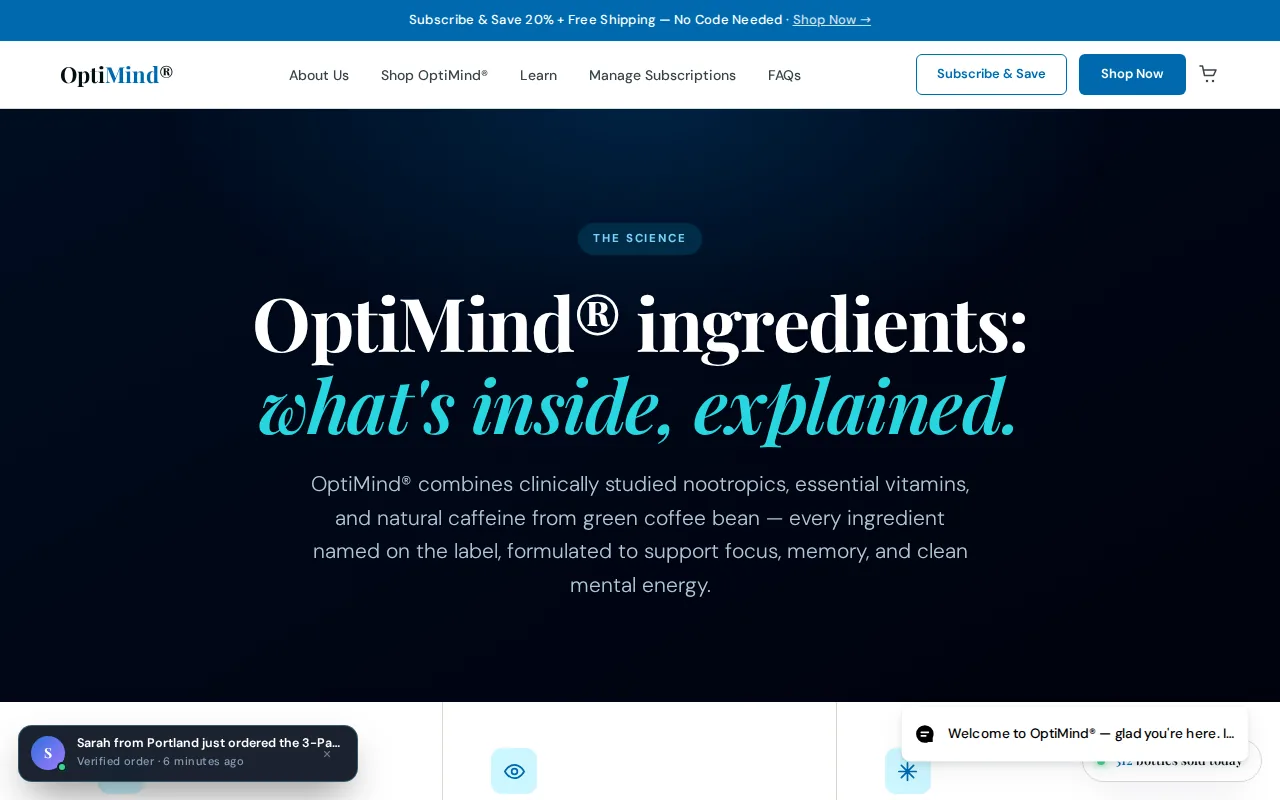
The formula uses 12 clinically studied ingredients. Its named compounds include L-Tyrosine, Phosphatidylserine, Synapsa Bacopa, Huperzine A, natural caffeine from green coffee bean, taurine, and vitamins B1, B12, and D3. L-Tyrosine supports the raw materials used to make certain neurotransmitters. Phosphatidylserine is a phospholipid linked with brain-cell membrane support.
That mix gives OptiMind a clearer purpose than a basic vitamin pill. Caffeine addresses alertness. Taurine is included for a smoother energy profile. Bacopa and Huperzine A are positioned around memory and recall.
Readers who want to inspect the formula can review OptiMind's ingredient and evidence page. It explains how the label names each active instead of hiding the formula inside a broad blend.
The main caveat is caffeine. Some people want a lift, while others feel wired after even a small amount. If you take medication, have a health condition, or react strongly to caffeine, ask a clinician before adding it.
OptiMind also separates short-term focus from longer-term memory support. That distinction is useful. You should not judge every ingredient after one capsule.
If you want to check the current formula and serving directions, the OptiMind product page is the right place to start. Use the label as your guide, especially if you already drink coffee or use another supplement with stimulants. Readers comparing package options can also review the OptiMind 3-Pack for a longer routine.
For readers seeking a named focus formula rather than a single nutrient, OptiMind is a strong fit in this shortlist. The promise is specific: the same day, the same workload, with a steadier mental pace.
2. Multivitamin - best for adults 60 and older
A daily multivitamin is the most sensible choice here for adults 60 and older who want broad nutrient coverage, not a fast stimulant effect. It belongs on a focus list because one large trial found a memory benefit in this age group.

A trial reported improved episodic memory among adults 60 and older who took a multivitamin. Episodic memory means the ability to recall events and experiences. That is different from staying locked onto a spreadsheet for three hours, so keep the claim in its lane.
This option may make sense when meals are light, appetite has changed, or a clinician has raised concern about nutrient intake. A multivitamin can cover several nutrients at once. It does not tell you which nutrient, if any, was holding you back.
Product labels need close reading. Multi-ingredient formulas can contain many compounds, yet the evidence may differ for each ingredient and dose.
The drawback is speed. A multivitamin is not a coffee replacement, and it is not a guaranteed focus aid. The trial result also applies most directly to older adults. It should not be stretched into a promise for college students, shift workers, or healthy young professionals.
There is another usable issue: overlap. If you take a multivitamin alongside a nootropic, check both labels for vitamin B12, vitamin D, vitamin E, or other repeated nutrients. More is not always better, and stacking makes it harder to tell what causes a benefit or side effect.
Look for clear labels rather than a long list with no amounts. Clear dosage information makes fair comparisons easier. A product that tells you what it contains gives you a better starting point.
Choose this category when your goal is general nutrient support, especially later in life. Choose OptiMind instead when the main task is sustained attention and clean energy during a demanding workday.
3. Omega-3 Fatty Acids - a brain-health option with limited focus evidence
Omega-3 fatty acids are better viewed as a general brain-health option than one of the best vitamins for focus. Fish oil commonly supplies EPA and DHA, while plant sources can supply ALA. Those are fatty acids, not vitamins.

The reason omega-3s remain popular is easy to understand. DHA is found in brain tissue, and fish is often part of healthy eating patterns. But a nutrient's role in the body does not prove that a capsule will sharpen attention in a healthy person.
Omega-3 supplements have not shown a proven brain-boosting effect. That does not mean omega-3s have no place in a diet. It means you should not buy fish oil mainly for a promised focus lift.
There is also a quality problem. Fish oil products can differ in the amount of EPA and DHA they provide. Some labels highlight total oil instead of the specific fatty acids. Read the Supplement Facts panel before comparing two bottles.
Omega-3s may be worth discussing with a clinician if you rarely eat fish or have a reason to consider them for general nutrition. They are a poor match for someone who wants to feel more alert before a long meeting this afternoon.
Fish oil also deserves a medication check. People who use prescription drugs or have a bleeding disorder should ask a health professional whether an omega-3 supplement fits their situation. Supplement safety depends on the person, not just the ingredient name.
Use omega-3s for a nutrition gap when that gap is real. Do not treat them as a direct replacement for a focus formula with a clear energy target.
4. B Vitamins - useful when deficiency is the issue
B vitamins may help focus when a deficiency is affecting energy or nerve function. They are a weak choice for boosting attention in someone who already gets enough through food.

This group includes several distinct vitamins. B12 supports normal blood and nerve cells. Other B vitamins help the body process food and support normal cell function. That work matters, but it does not turn a standard B-complex into a proven concentration aid.
Limited studies found no clear evidence that B-vitamin supplements improve focus in people without a deficiency. That finding points to a better first move: find out whether a low level, restricted diet, absorption problem, or medication issue is present.
A clinician may use symptoms, diet history, health history, and lab work to decide what to test. Fatigue and brain fog have many possible causes. Poor sleep, stress, anemia, medication effects, and thyroid problems can all feel like a vitamin problem.
There is a safety trap in treating B vitamins as harmless by default. Different B vitamins behave differently, and high-dose products can create problems for some people. A supplement should match a known need rather than a vague wish to feel sharper.
OptiMind includes B1 and B12 as part of a wider formula. That does not make it a treatment for B-vitamin deficiency. It means the product pairs those nutrients with nootropic ingredients such as L-Tyrosine, Phosphatidylserine, Bacopa, and Huperzine A.
If you are already taking a multivitamin or other fortified products, compare the labels before adding a B-complex. Repeated ingredients can make your daily intake hard to track. The guide to Phosphatidylserine and focus can also help you separate a broad vitamin claim from a specific nootropic ingredient claim.
Pick B vitamins when a real nutrition issue points that way. If your labs and diet are fine, look beyond a basic B-complex for a focus product.
5. Ginkgo Biloba - a popular choice without proven focus benefits
Ginkgo biloba is a leaf extract often sold for memory and mental sharpness. It is a familiar supplement, but the evidence does not support it as a reliable focus aid.

Available evidence does not show a proven focus benefit. Ginkgo marketing often turns broad brain-health language into a promise of better daily attention.
Ginkgo products can vary in their chemical makeup and extraction process. That makes one label different from another, even when both use the same plant name. Benefits are not well defined, and products may cause side effects such as dizziness, headache, fast heartbeat, or stomach upset.
Bleeding risk is the bigger concern for some users. Ginkgo may raise the risk of bleeding or bruising, especially alongside certain anti-inflammatory drugs or blood thinners. Anyone taking medication should ask a health professional before using it.
Pregnancy and breastfeeding also call for caution because safety is not clear in those settings. Ginkgo may affect alertness or coordination in some people, so do not assume a plant-based capsule has no effect on daily activities.
Another issue is dose confusion. A typical amount is 120 mg twice daily, but products and extracts differ. Do not copy a dose from one bottle onto another. Follow the exact label for the product you have.
Ginkgo can be reasonable only when a clinician has a specific reason to suggest it and has reviewed your medicines. It is not the pick I would make for a student facing a long study block or a professional facing back-to-back calls.
Quick comparison of the best vitamins for focus
The table below separates the goal each option can reasonably serve from the claim it cannot support. That distinction keeps a general nutrition supplement from being mistaken for a targeted nootropic.
| Option | Best fit | Evidence signal | Main limitation |
|---|---|---|---|
| OptiMind | Adults seeking sharp focus and clean energy | Product uses 12 clinically studied ingredients | Caffeine may not suit everyone; results vary |
| Multivitamin | Adults 60 and older seeking broad nutrient support | Improved episodic memory in adults 60 and older | Not a direct, fast focus booster |
| Omega-3 fatty acids | People addressing a dietary omega-3 gap | No proven brain-boosting effect from supplements | EPA and DHA amounts vary by product |
| B vitamins | People with a confirmed or suspected deficiency | Limited studies found no evidence of benefit for focus | High-dose products may be a poor fit |
| Ginkgo biloba | People using it only after medical review | No benefit for dementia risk | Possible medicine interactions and bleeding risk |
Ingredient transparency should guide the final choice. A short label with named amounts can make comparison easier.
OptiMind's label is built around named actives and a stated focus goal. You can review the OptiMind timing and dosage guide before deciding whether its routine fits your morning.
Do not judge a supplement by the word “brain” on the front. Ask what it contains, what the evidence actually tested, and whether the claim matches your goal. For a deficiency, fix the deficiency. For sustained attention, choose a formula designed for that job.
FAQ
What are the best vitamins for focus?
The best choice depends on why your focus is poor. A multivitamin may fit some adults 60 and older, while B vitamins make sense when deficiency is involved. For targeted attention and clean energy, OptiMind is a strong fit in this shortlist because it uses a multi-ingredient nootropic formula.
Do B vitamins help with concentration?
B vitamins may help concentration when a deficiency is affecting energy or nerve function. They have not shown a clear focus benefit for people who already get enough. Ask a clinician about diet, symptoms, medicines, and testing before treating brain fog as a simple B-vitamin gap.
Does fish oil improve focus?
Fish oil has not shown a reliable focus benefit in supplement research. EPA and DHA still have a role in nutrition, especially when dietary intake is low, but that is a different claim. Choose fish oil for a clear nutrition reason rather than expecting a same-day attention boost.
Is ginkgo biloba good for focus?
Ginkgo biloba is not a proven focus aid. Research found no clear benefit for focus or dementia risk, and the supplement can interact with medicines. It may also raise bleeding concerns for some users. Get medical advice before taking it, especially if you use a blood thinner.
Can a nootropic replace coffee?
A nootropic may reduce your need for coffee, but it should not be assumed to replace it safely. OptiMind includes natural caffeine, so people who are sensitive to stimulants should check the label and consider their total daily intake. Start with the stated serving and watch your response.
Conclusion
If you want general nutrition support, match the supplement to a real gap. If you want sharper attention through a demanding day, OptiMind is the clearest fit among these options. Review the label, check for stimulant overlap, and speak with a clinician if you take medication or have ongoing brain fog. Then choose one routine and track how you feel across the same workload for several weeks.