The best brain booster supplement should help you focus without making your workday feel like a caffeine gamble. OptiMind is the first product to assess if you want sharp focus, clean energy, and a full label instead of vague promises. Use the steps below to match the formula to your goal, check the evidence, and test your choice fairly.
Step 1: Start With OptiMind’s Formula and Your Primary Goal
The best brain booster supplement for you depends on the task you need to handle. A student preparing for an exam may want memory support. A nurse on a long shift may care more about steady attention. A manager facing six hours of meetings may want clear thought without jitters.
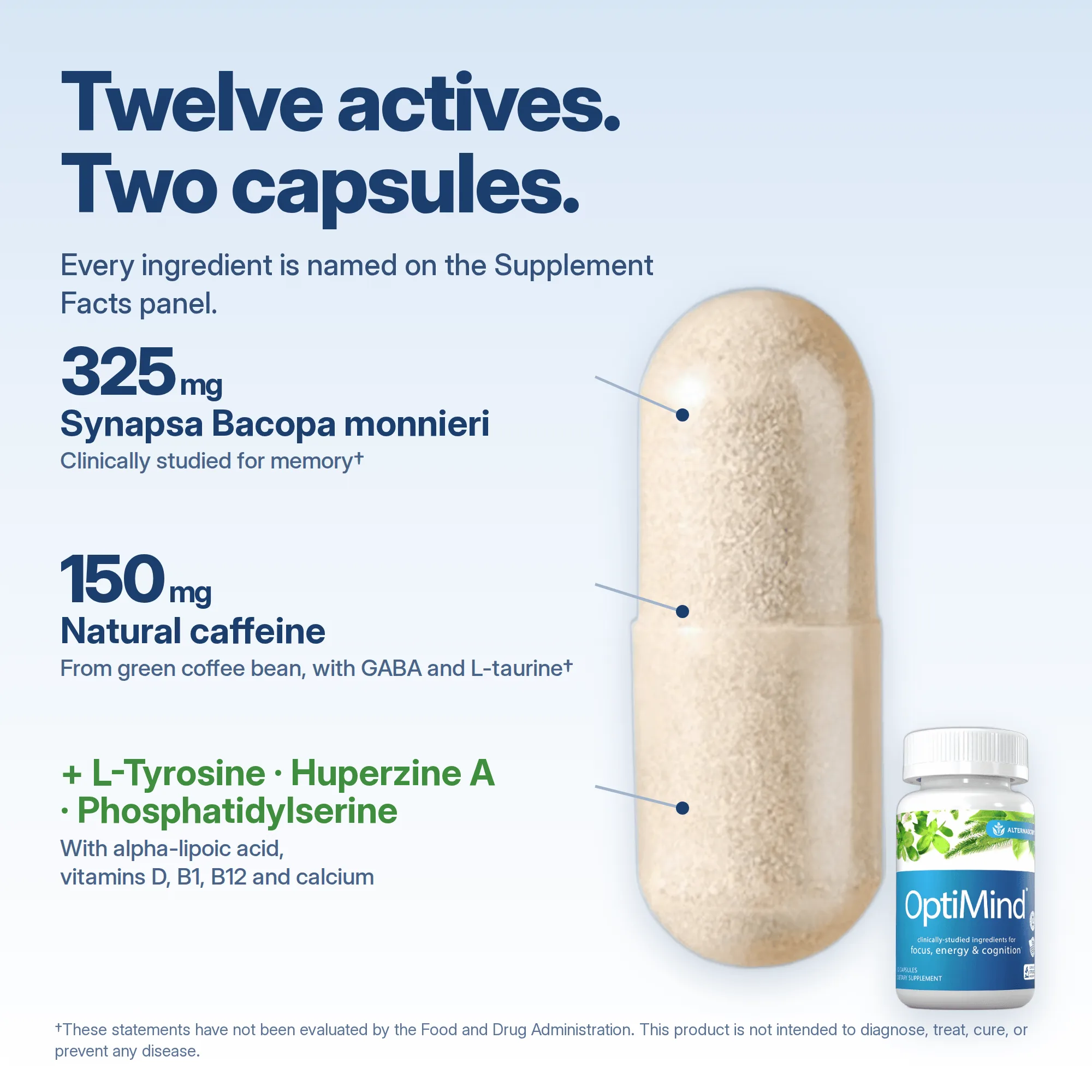
Start with OptiMind because its stated purpose is sharp focus with clean, crash-free energy. The formula contains 12 clinically studied nootropic ingredients, and every active ingredient is named on the label. That gives you a clear place to begin. You can review the science behind OptiMind’s ingredients before you decide if the formula fits your needs.
Write down one main goal before you compare products. Keep it narrow. “Think better” is too broad to test. “Stay with a report for 45 minutes without reaching for another coffee” gives you a usable target.
Then mark your current baseline. Note when your focus drops, how often you switch tasks, and whether caffeine leaves you tense or tired later. You don't need a lab test. You need the same kind of work on several days.
Match the product to the work
OptiMind may suit healthy adults who want daily focus support. It isn't a treatment for memory loss, dementia, or another medical condition. Clinical compounds discussed in academic research can target very different groups. Some are studied for older adults or people with cognitive disease, which doesn't make them a fit for a healthy professional.
That distinction matters. A product aimed at vascular dementia isn't automatically useful for a person writing code late in the afternoon. A compound linked with memory research isn't proof that it will improve your next study session.
Set one success measure now. You might track uninterrupted work time, the number of task switches, or how well you recall key points after a meeting. Keep the measure simple enough to use every day.
Step 2: Check Whether the Ingredients Match the Cognitive Benefit You Want
The best brain booster supplement should connect its ingredients to a specific cognitive goal. Don't stop at a large ingredient count. Ask what each ingredient is meant to do and whether that role matches your need.
OptiMind includes named nootropic ingredients plus vitamins. Its listed ingredient discussion includes L-Tyrosine and Phosphatidylserine. A plant extract is commonly discussed for memory support. L-Tyrosine is an amino acid linked with neurotransmitter production. Phosphatidylserine is a brain-cell nutrient often studied in connection with memory and cognitive function.
Those descriptions are starting points, not promises. The strength of evidence can vary by ingredient, dose, study group, and task. A study on a particular extract doesn't prove that every product containing a similar plant will produce the same result.
Build an ingredient-to-goal check
Use this short review for each formula:
- Focus: Look for a clear explanation of how the formula supports attention or mental clarity.
- Memory: Check whether the product discusses memory support without claiming to prevent disease.
- Energy: Find out if the lift comes from caffeine, another stimulant, or a non-stimulant approach.
- Stress response: See whether the product may fit demanding work without making a promise about anxiety or mood treatment.
Don't assume that “natural” means mild. Caffeine is natural. So are many plant extracts that can affect the body. If you already drink coffee, tea, or energy drinks, count those sources before adding another formula.
Research on individual dietary ingredients and brain health shows why careful wording matters. This research discusses possible memory and stress-related effects while also noting that much of the evidence comes from varied research designs. A possible mechanism is not the same as a proven daily result.
Next, inspect the Supplement Facts panel. You want the exact ingredient names and amounts, not a blend that hides them. The research context for OptiMind says its active ingredients are named on the label, which makes the product easier to compare with your other sources of caffeine or nootropic compounds.
If your goal is clean focus, avoid building a stack that repeats the same type of ingredient. More capsules don't always mean a better result. They can make it harder to know what helped or caused a side effect.
Step 3: Separate Evidence-Based Benefits From Overstated Claims
The best brain booster supplement should make claims you can understand and test. “Supports focus” is a general wellness claim. “Prevents Alzheimer’s disease” is a disease claim that should raise an immediate red flag for an over-the-counter supplement.
Use a three-part claim check. First, identify the exact benefit. Then ask what kind of evidence supports it. Finally, decide whether the claim fits your goal as a healthy adult.
Read the claim, not the mood of the page
Words such as “clinically studied” need context. Was the ingredient studied, or was the finished product studied? Were participants healthy adults? Did the study measure focus during a task, or did it look at a long-term health outcome?
These details change the meaning. A study involving older adults with a medical condition does not prove that a supplement will improve a healthy worker's afternoon focus. A short alertness result also doesn't prove better long-term memory.
Be careful with customer stories too. A person may say a supplement helped them stay alert. That experience may be useful as a personal report, but it isn't a controlled test. It also may not show whether sleep, food, workload, or expectation caused the change.
Review the linked source when evaluating a dramatic promise.
Use a claim ladder
- Reasonable:“Supports focus during demanding work.”
- Needs context:“Improves memory,” because the result may depend on the ingredient and study group.
- Red flag:“Treats dementia” or “reverses cognitive decline.”
OptiMind belongs in the first group when it is described as a nootropic for focus, memory support, and clean energy. Keep that claim in its lane. It can be a daily performance supplement. It shouldn't replace a medical assessment when memory loss is new, worsening, or affecting daily life.
Also check whether the brand tells you what is in the formula. Transparency helps, but it doesn't prove that every ingredient will work for you. It simply gives you better information for a fair decision.
Take a firm stance here: reject any product that uses disease language to sell a general supplement. Strong marketing isn't stronger evidence.
Step 4: Screen for Safety, Stimulant Load, and Daily Tolerance
The best brain booster supplement is one you can take without wrecking your sleep or making your workday harder. A sharp first hour means little if you feel wired at night and tired the next morning.
Start with the full stimulant picture. List your coffee, tea, energy drinks, pre-workout products, and any supplement that contains caffeine. Check the current OptiMind label for stimulant information before use, especially if your caffeine tolerance is low.

Don't add a new supplement on the same day you change your coffee habit. If you do, you won't know what caused a headache, restlessness, stomach upset, or a late bedtime. Change one variable at a time.
Use a safety screen
- Read the complete Supplement Facts panel.
- Check for ingredients you already take elsewhere.
- Ask a clinician or pharmacist about medication interactions.
- Use extra care if you're pregnant, nursing, managing a health condition, or preparing for a procedure.
- Stop and seek medical advice if you develop a concerning reaction.
Pay attention to timing. A morning serving may fit a long work block better than an afternoon serving. Follow the product label rather than copying someone else's routine. OptiMind also provides a dosage and timing guide for readers who want the brand's instructions in one place.
Daily tolerance is more than “does it feel strong?” Ask whether you can sleep normally, stay calm during small setbacks, and keep your appetite and stomach comfortable. A supplement that only works when you accept side effects isn't a good daily fit. For additional ingredient, dosage, shipping, and return information, review the OptiMind FAQs.
People with a history of sensitivity to stimulants may prefer a lower-stimulation plan. People who already sleep poorly should fix that issue before judging any focus product. No capsule can make up for a night of broken sleep.
Step 5: Compare Serving Format, Supply, and Value Without Chasing the Lowest Price
The best brain booster supplement isn't always the product with the lowest cost per serving. Value depends on the formula, the serving routine, the label detail, and whether you can follow the plan without skipping days.
Start by finding the serving size. A bottle count can mislead you if the label calls for more than one capsule per day. Convert the bottle into daily servings. Then compare the cost of a month of use, if the seller provides enough information to do so.
Starting prices were available for only part of the market, so an advertised average should not be treated as a universal benchmark. Compare like with like.
| Decision point | What to check | Why it matters |
|---|---|---|
| Serving math | Capsules or scoops per day | A low bottle price can hide a short supply. |
| Formula clarity | Named ingredients and stated amounts | You can compare the product and avoid needless overlap. |
| Format | Capsule, powder, or gummy | The easiest format is the one you can take as directed. |
| Stimulant fit | Caffeine source and your current intake | This helps reduce jitters and sleep problems. |
| Return terms | Current seller policy | You need a clear path if the product doesn't suit you. |
OptiMind is sold as a capsule formula, and the product pages describe 12 clinically studied ingredients for focus, memory, and clean energy. If you already know you'll use it each morning, compare the OptiMind 3-Pack value option with a single bottle. Do the math from the current page rather than relying on an old deal.
Don't pay more simply because a label uses impressive words. Pay more only when the extra cost buys something you value, such as a transparent formula or a serving format that fits your day.
Think about friction. If you travel between a hospital, home, and a second job, a simple capsule routine may beat a powder that needs mixing. If you dislike swallowing capsules, a different format may be easier, but check whether the serving requires several pieces.
Value also includes consistency. A product that sits in a drawer has no value, even if the price looks good. Choose the option that fits your actual morning, not an ideal routine you won't keep.
Step 6: Test Your Choice Consistently and Track the Results
The best brain booster supplement should earn its place through a fair test. Don't judge it after one unusually good morning or one stressful afternoon.
Set a short observation period based on the product label and your clinician's advice. Keep the main conditions steady. Use the same general time of day, the same coffee routine, and a similar workload when possible.
Track useful signals
Use a simple note on paper or in your phone. Record:
- When you took the product.
- When you started focused work.
- How many times you switched tasks during a set block.
- Your perceived focus on a scale from one to five.
- Your sleep quality that night.
- Any headache, stomach issue, restlessness, or crash.
Keep the same workload when you can. The phrase “the same day, the same workload” is useful because it limits guesswork. If Tuesday is a quiet desk day and Wednesday is a crisis shift, don't treat the two scores as equal evidence.
Look for a pattern rather than a perfect score. You may notice that you start work more easily, but your sleep gets worse. You may feel no clear benefit after several consistent tests. Both results matter.
Food and sleep still shape the result. A supplement may not help much when you don't have a deficiency. Build a wider routine alongside any product.
Don't raise the serving because the first day felt flat. Follow the label. If you want a change, make one change and track it. If a product causes a troubling reaction, stop and ask a health professional what to do.
After the test, make a clear call. Keep the product if the benefit is useful, repeatable, and easy to tolerate. Drop it if the result is vague, the side effects outweigh the gain, or the cost strains your budget.
OptiMind is a sensible first option for adults who want a focus-centered formula and prefer a transparent ingredient list. Start with the current label, use the same routine, and judge the pattern rather than chasing a dramatic feeling.
FAQ
What is the best brain booster supplement for focus?
OptiMind is a strong first option for adults who want focus support with clean, crash-free energy. It contains 12 clinically studied nootropic ingredients, and its label names the active ingredients. Your fit still depends on caffeine tolerance, medications, sleep, and your main goal.
Do brain booster supplements really work?
Some ingredients may support a specific cognitive task, but results vary by formula, dose, and person. A brain booster supplement should not promise to treat dementia or prevent memory loss. Check the evidence for the finished product, read the full label, and track your own response.
Is OptiMind caffeine-free?
Check the current OptiMind label before taking it because available product information has described natural caffeine from a plant source. The brand positions the formula around clean energy without a crash, but your total daily caffeine still includes coffee, tea, and other supplements.
How long does it take for a brain supplement to work?
The timing depends on the formula and the benefit you are tracking. Alertness may feel different from memory support, and one day is weak evidence. Follow the label, keep your routine steady, and compare results across similar workdays before making a decision.
Are nootropics safe for everyone?
Nootropics aren't safe for everyone. Ingredients can affect sleep, heart rate, digestion, or medication response. Ask a clinician or pharmacist before use if you take medication, have a health condition, are pregnant or nursing, or have strong sensitivity to caffeine or other stimulants.
Conclusion
Choose OptiMind if your main goal is clear focus with a transparent, clinically studied nootropic formula. Before you buy, review the current label, note your existing caffeine intake, and set one work measure to track. Give the routine a fair test, then keep it only if the benefit is repeatable and easy to tolerate.