Your brain isn't broken. It's just under-fueled. Whether you're grinding through a deadline or struggling to string three focused hours together, the right supplement can genuinely move the needle. Here are 11 of the best options for sharper concentration and sustained focus, starting with the one we built from the ground up.
1. OptiMind , Best All-in-One Nootropic for Clean Focus
OptiMind is a 12-ingredient nootropic formula built for one outcome: sharp, crash-free focus throughout your workday. We designed it for students, professionals, and anyone who needs their brain operating at full capacity without the 2pm collapse.

Every two-capsule serving delivers clinically studied Bacopa Monnieri for memory, L-Tyrosine for dopamine-driven motivation, Phosphatidylserine for cell health, GABA for calm focus, Huperzine A for recall, and natural caffeine from green coffee bean for clean, measured energy. Four vitamins are listed individually on the label, Vitamin D, B1, B12 (as Methylcobalamin), and Calcium, so you know exactly what you're getting.
Most focus supplements rely on a single mushroom extract or a vague proprietary blend. OptiMind takes the opposite approach: 12 clinically studied ingredients, all named on the Supplement Facts panel, working on three neurotransmitter systems simultaneously. The caffeine dose is a measured 75 mg (roughly half a cup of coffee), balanced with GABA so the energy builds gradually rather than spiking.
Acute effects typically begin within 30 to 60 minutes. Cumulative memory benefits from Bacopa and Huperzine A build over four to twelve weeks of daily use, so consistency matters. The OptiMind® Brain Supplement single-pack starts at $39.99 if you want to try it first.
Caveat: it does contain caffeine, so avoid taking it within six hours of sleep. Anyone sensitive to stimulants should start with one capsule and assess tolerance.
2. Citicoline, The Gold-Standard Brain-Energy Precursor
Citicoline is a compound your brain uses to produce acetylcholine, the neurotransmitter most directly tied to focused attention and learning. It's one of the most studied single ingredients in the nootropic world.
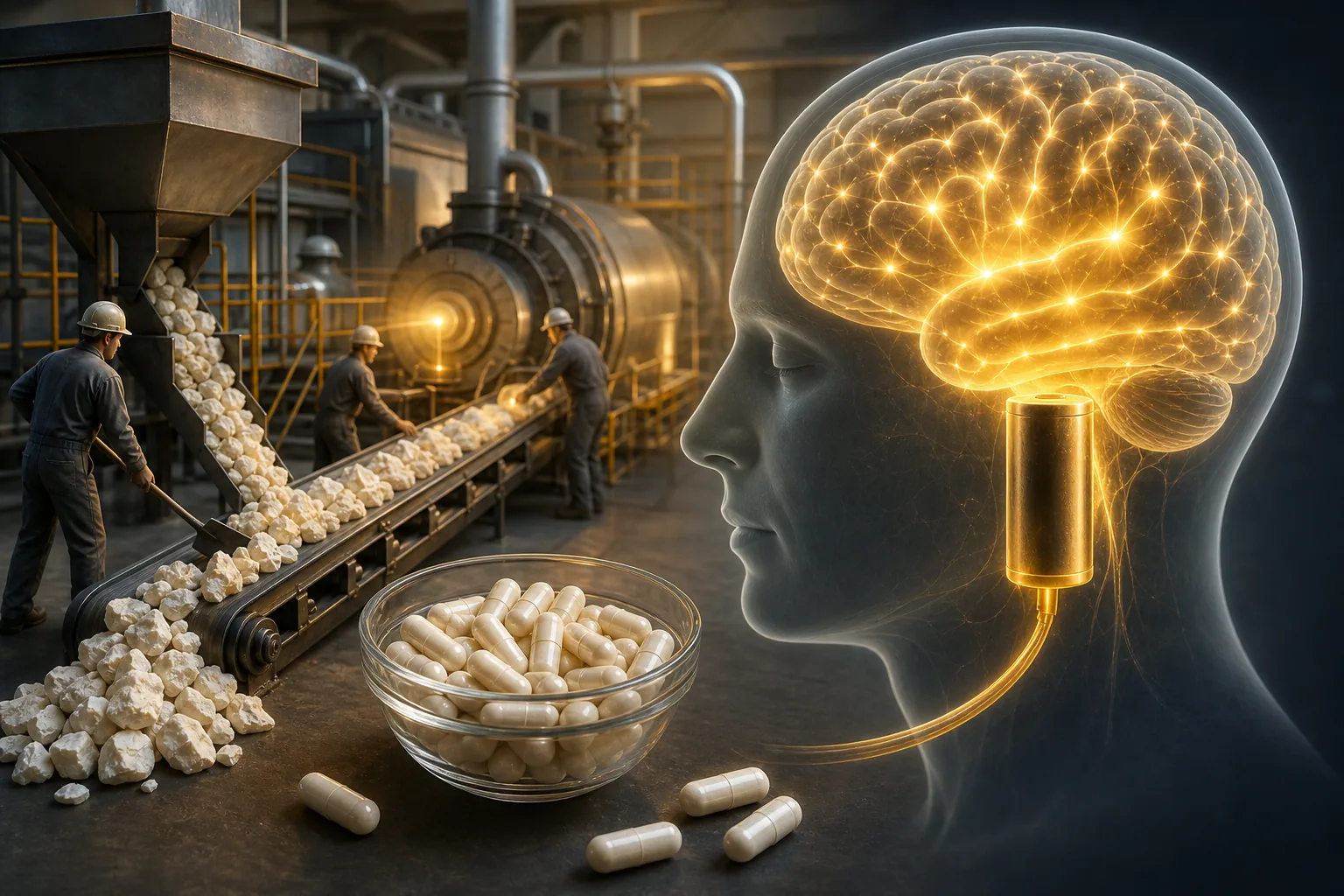
The studied dose range is 250 to 500 mg daily, and it's stimulant-free. Its regulatory status in various countries reflects how seriously researchers and health authorities take the evidence behind it.
It works well on its own and pairs especially well with other focus ingredients. OptiMind's nootropic ingredients database notes that citicoline supports acetylcholine production, attention, and focus at studied doses of 250 to 500 mg. If you prefer a standalone option, citicoline capsules are widely available.
One honest caveat: WebMD's review of brain supplements notes that while there's decent evidence for citicoline benefiting memory in people who already have memory problems, its effects in healthy adults without deficiencies are less clear-cut. It's a smart ingredient in a stack, but don't expect dramatic effects overnight.
3. Bacopa Monnieri , Clinically Proven Memory and Focus Herb
Bacopa monnieri is one of the few herbal nootropics with a real track record in human clinical trials. It's been used in traditional Ayurvedic medicine for centuries, but the modern research on memory and learning is what earns it a spot on every serious list of supplements for concentration and focus.

The studied dose is 300 to 600 mg daily, standardized to 50% bacosides. The important thing to understand is that Bacopa is slow. Most research protocols run 8 to 12 weeks, and benefits build over time rather than hitting on day one. If you quit after two weeks because nothing happened, you quit too early.
OptiMind includes a standardized Bacopa extract in its formula. You can read more about how it works alongside other ingredients in the OptiMind ingredients breakdown. For students especially, Bacopa is worth considering as a long-term memory support tool rather than a quick fix.
It's stimulant-free and has a low side-effect profile. Some people experience mild digestive discomfort if taken on an empty stomach, so take it with food.
4. Lion's Mane Mushroom , Long-Term Neuroplasticity Support
Lion's Mane (Hericium erinaceus) is the most talked-about mushroom in the cognitive space right now, and for good reason. Research suggests it supports nerve growth factor (NGF) production, which relates to neuroplasticity, the brain's ability to form and strengthen connections.

The studied dose range is wide: 500 to 3,000 mg daily. Single-ingredient Lion's Mane products typically deliver 1,000 mg per serving. Like Bacopa, this is a long-game ingredient. Short-term, single-day use won't produce dramatic results. The benefit is cumulative.
It's stimulant-free and suitable for vegans when encapsulated appropriately. The main caveat is the mushroom allergy risk: a small percentage of people have reactions, and digestive discomfort at high doses has been reported. Start at the lower end of the dose range.
Lion's Mane is best thought of as a foundational cognitive health ingredient rather than an acute focus tool. Pair it with a faster-acting formula on days when you need immediate performance.
5. Rhodiola Rosea , Stress-Resilience Adaptogen for Sustained Attention
Rhodiola rosea is an adaptogen, meaning it helps your body and brain respond more efficiently to stress. For focus purposes, the relevant mechanism is cortisol modulation. When cortisol runs too high, concentration tanks. Rhodiola appears to help regulate that response.

The studied dose is 200 to 600 mg daily, standardized to 3% rosavins and 1% salidroside. It's stimulant-free. Practitioners who focus on stress-related cognitive decline specifically call out Rhodiola for helping individuals who are stressed and agitated rather than simply dopamine-deficient.
Rhodiola tends to work best for people whose focus problems stem from burnout or chronic stress rather than simple under-stimulation. If your brain feels foggy and anxious rather than flat and unmotivated, this is worth prioritizing. If you're interested in how adaptogens and natural energy compounds interact, this guide to best natural supplements for energy covers complementary options worth knowing about.
It pairs well with L-Theanine for a calming, anti-stress stack that doesn't sedate.
6. Omega-3 Fatty Acids (DHA/EPA) , Essential Brain Structure Support
DHA (docosahexaenoic acid) is the specific omega-3 fat your brain needs most. It's a structural component of neuronal membranes, and adequate levels keep those membranes flexible enough for fast signal transmission.
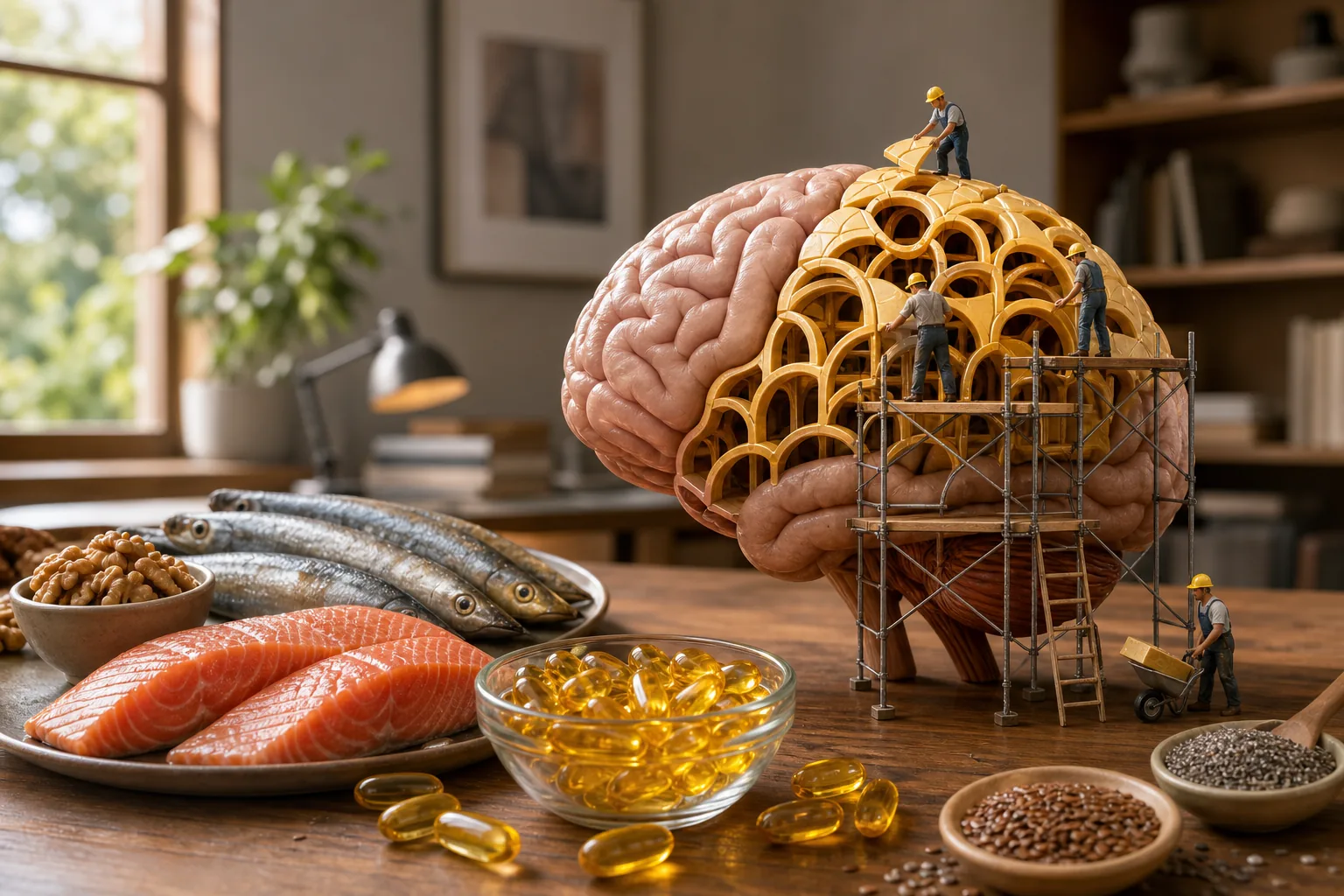
A study published in theAmerican Journal of Clinical Nutritiongave 176 young adults 1.16 g of DHA daily for six months and found statistically significant improvements in reaction time and working memory. The mechanism is cell membrane fluidity: a more flexible membrane means faster signal conduction between neurons.
The catch is dosing. Most standard fish oil capsules contain 200 mg or less of actual DHA. Getting to a meaningful dose of around 1 g of DHA daily usually requires either a high-DHA concentrated fish oil or daily fatty fish consumption. Algae-based DHA is a good option for anyone avoiding fish products.
This is a foundational supplement rather than a focus accelerator. Don't expect to notice a difference in your afternoon focus session. Over months, the structural support to brain-cell membranes adds up. DHA is the most abundant omega-3 fatty acid in the brain and retina, which underscores why dietary sufficiency matters for cognitive performance.
7. B-Vitamin Complex (B6, B9, B12) , Foundational Cognitive Co-Factors
B vitamins don't get your attention like a new mushroom compound, but they do something those trendy ingredients can't: they're essential cofactors in the pathways your brain uses to produce dopamine and other neurotransmitters.

Vitamin B6 in its activated form (P5P) is required at nearly every step of the dopamine synthesis pathway. B12 maintains the myelin sheath around nerve fibers, the insulation that keeps signals traveling fast and clean. B9 (folate) supports methylation processes tied to mood and cognition. If you're deficient in any of these, no fancy nootropic stack will work as well as it should.
OptiMind includes 500 mcg of Vitamin B12 as Methylcobalamin per serving, the bioavailable form. For standalone B-complex supplementation, WebMD's clinical review notes that B vitamins play a clear role in brain health, but adds an honest caveat: if you're already getting enough through diet, a supplement may not produce noticeable effects. Where deficiency exists, the difference can be significant.
Best food sources for B vitamins include leafy greens, eggs, and whole grains. If your diet is already solid, focus on other ingredients on this list. If your diet is inconsistent, a B-complex is a smart, low-risk starting point.
8. Phosphatidylserine , The Cell-Membrane Sharpness Nutrient
Phosphatidylserine (PS) is a phospholipid that makes up a significant portion of brain-cell membranes. Levels naturally decline with age, and that decline tracks with the kind of short-term memory and attention issues that tend to creep up after 40.

The studied dose is 100 to 300 mg daily, taken with food. It's stimulant-free. Research has focused particularly on its role in supporting acetylcholine balance, the neurotransmitter most directly linked to focused attention and working memory.
OptiMind includes Phosphatidylserine 50% Powder in its Focus Blend. L-Tyrosine and Phosphatidylserine together support dopamine and acetylcholine balance, which is why they appear together in well-designed nootropic formulas. If you're over 40 and noticing memory slippage, PS deserves a serious look as a standalone or as part of a complete formula.
The main usable consideration is sourcing. Sunflower-derived PS is the most common allergen-friendly option. Soy-derived PS is also effective but may not suit everyone.
9. Creatine , Unexpected Brain Energy Booster for Focus
Creatine is the gym supplement that turned out to be a brain supplement. The mechanism makes sense once you know it: the brain accounts for 20 to 30% of the body's total energy demand despite being only 2% of body weight. Creatine supports short-burst ATP production, and that applies to neurons just as much as muscle cells.
A review published inExperimental Gerontologyexamined six studies and found that creatine improved short-term memory, intelligence test scores, and reasoning. The effective dose for cognitive purposes is lower than for athletic performance, around 1 to 3 grams daily rather than the 5-gram loading dose common in sports nutrition.
It's stimulant-free, cheap, and has one of the best safety profiles of any supplement on this list. The downside is that it requires consistent daily use to saturate brain creatine stores, and the cognitive effects are subtler than the physical ones. You won't feel it the way you feel caffeine. Think of it as infrastructure: you notice its absence more than its presence.
If you're interested in building a smart supplement stack around ingredients like creatine, the OptiMind guide to building a nootropic stack walks through how to combine ingredients without overcomplicating things.
10. Ginkgo Biloba , Blood-Flow Enhancer for Sharp Mental Clarity
Ginkgo biloba was massive in the 1990s, faded somewhat as research results got mixed, and is now having a quiet evidence-based comeback. The clearest mechanism is cerebrovascular: ginkgo appears to increase blood flow to the brain's white matter, the information highways that connect different brain regions.
Higher dose studies (around 240 mg) showed dose-dependent improvements in cognitive task scores. The takeaway is that dose matters more than many people realize with ginkgo: the 40 mg capsules sold at most pharmacies may not deliver what the research actually used.
WebMD's clinical review is honest about the mixed evidence: some well-designed trials show benefit, while a large study in older adults found no effect on dementia prevention. For acute blood-flow and mental clarity support in healthy adults, 120 to 240 mg of a standardized extract is the range most commonly studied.
It's stimulant-free and pairs well with other focus ingredients, particularly those that work on neurotransmitter pathways rather than circulation. Give it four to six weeks before drawing conclusions.
11. L-Theanine , Calm, Jitter-Free Focus (Great with Caffeine)
L-Theanine is an amino acid found naturally in green and black tea. On its own, it promotes a calm, relaxed state without sedation. Paired with caffeine, something clicks: you get alert focus without the jittery edge that caffeine alone tends to produce.
The studied dose is 100 to 200 mg. Research has found that caffeine plus L-Theanine produced small-to-moderate improvements in attention-switching accuracy and subjective alertness compared with placebo. The common ratio studied is roughly 100 mg caffeine to 200 mg L-Theanine.
For students and professionals who already drink coffee, adding L-Theanine is one of the simplest and most evidence-backed ways to improve the quality of that caffeine hit. It takes the spike-and-crash risk down significantly.
L-Theanine is already built into OptiMind's formula alongside the natural caffeine, which is exactly why the energy from OptiMind feels steadier than a straight cup of coffee. If you want to explore the comparison in more depth, the nootropics vs. coffee breakdown covers the difference clearly.
How to Choose the Right Focus Supplement for Your Needs
Not every focus problem has the same root cause, and that matters for which supplement you reach for first.
Three usable rules for choosing well. First, match the ingredient to your actual problem: a cortisol-driven fog won't respond to the same solution as a low-dopamine motivation problem. Second, check dosing: most products list an ingredient but at half the studied dose. Read the label before you buy. Third, give it time: most non-stimulant nootropics need four to twelve weeks of consistent use before you can assess whether they're working for you.
If you want to skip the trial-and-error and get a fully stacked formula from day one, OptiMind covers the most common focus pathways in a single capsule. That's the usable choice for most people.
FAQ
What supplements actually help with concentration and focus?
The most evidence-backed options are L-Theanine (especially with caffeine), Bacopa Monnieri, Citicoline, Phosphatidylserine, Rhodiola Rosea, and Omega-3 DHA. Multi-ingredient formulas like OptiMind combine several of these into one daily capsule. Single ingredients like creatine and Lion's Mane have emerging but promising research. The key is matching the supplement to the root cause of your focus problem.
How long do focus supplements take to work?
It depends on the ingredient. Caffeine-containing formulas like OptiMind produce effects within 30 to 60 minutes. L-Theanine and Rhodiola also act relatively quickly, often within an hour. Bacopa Monnieri, Lion's Mane, Phosphatidylserine, and creatine all build cumulatively and typically require four to twelve weeks of consistent daily use before the full effect becomes clear.
Is it safe to take nootropics every day?
Most well-formulated nootropics with clearly listed ingredients are designed for daily use. OptiMind, for example, is built as a daily supplement with ingredients chosen for long-term usability. That said, always check for interactions with any prescription medication you take, and if you're pregnant, nursing, or have a health condition, talk with your healthcare provider before starting any supplement routine.
What's the difference between a nootropic stack and a single-ingredient supplement?
A single-ingredient supplement (like Lion's Mane or Bacopa alone) targets one mechanism. A nootropic stack combines multiple ingredients to address focus, energy, and memory at the same time. Stacks can produce stronger, more well-rounded results, but quality matters: look for fully transparent labels where every ingredient and dose is listed. OptiMind's 12-ingredient formula is one example of a ready-made stack with a clear label.
Can I take focus supplements with coffee?
Yes, but watch total caffeine intake. If your supplement already contains caffeine (OptiMind has 75 mg per serving from green coffee bean), adding a large coffee on top may push you past a comfortable stimulant dose. A moderate cup of coffee alongside a caffeinated nootropic is generally fine for most adults. If your supplement is caffeine-free, coffee pairs with it without issue.
Do B vitamins actually help with brain focus?
B vitamins are essential cofactors in neurotransmitter production, including dopamine pathways. If you're deficient, correcting that deficiency can produce noticeable improvements in mood, energy, and concentration. For people already getting adequate B vitamins through food, a supplement is less likely to produce dramatic effects. A B-complex or a formula that includes B12 (like OptiMind) is a low-risk, sensible baseline for anyone with an inconsistent diet.
Conclusion
The supplements that genuinely support concentration are those backed by real human research, dosed properly, and matched to your specific focus problem. If you want one formula that covers the most common cognitive pathways without building a complex personal stack, OptiMind's two-bottle option gives you a full month or more of 12 clinically studied ingredients on a transparent label. Start there, stay consistent, and give it the weeks it needs to work.
These statements have not been evaluated by the Food and Drug Administration. This product is not intended to diagnose, treat, cure, or prevent any disease.