How much is too much when a supplement promises sharper focus? The answer changes fast: surveyed nootropic doses ranged from 1 mg to 750 mg, while some compounds use grams. Here are the three OptiMind pack options, plus the dosage categories, timing rules, and safety checks that help you choose with care.
1. OptiMind® Brain Supplement — 3-Pack
The OptiMind® Brain Supplement , 3-Pack is the best fit for daily users who already know they want a steady focus routine. It includes three bottles with 96 vegetarian capsules and is priced at USD 99.95.
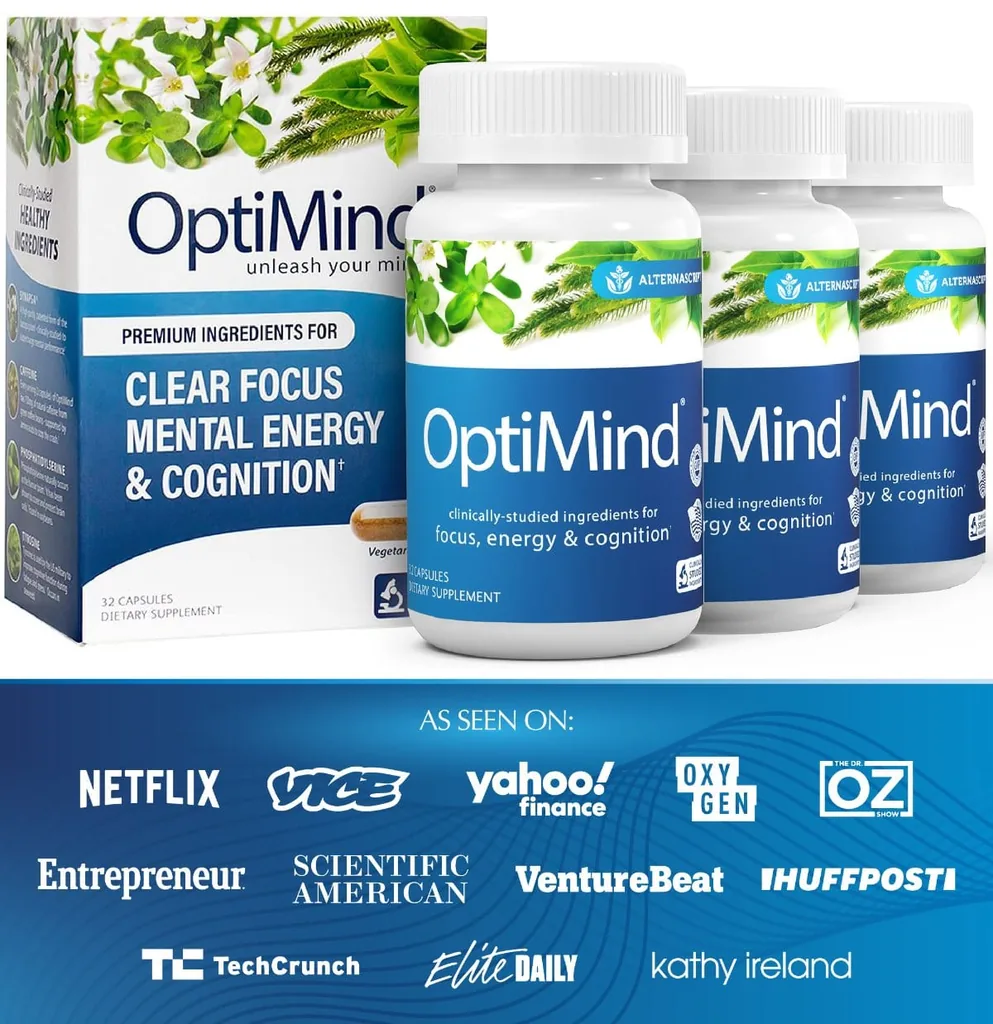
OptiMind is formulated with clinically studied ingredients that support sustained attention, mental clarity, healthy information retention, and daily energy. The formula also uses naturally sourced caffeine and is positioned for clean energy without the jitters or crash linked with high-stimulant products.
Consistency is the main reason to choose this pack. A daily formula works better as a habit than as a last-minute rescue before a hard shift or exam. The same serving, the same morning window, and the same workload give you a fair way to judge how you respond.
The current product guidance says to take 1, 2 capsules daily in the morning with water. If you are new to nootropics, start at the lower end of the stated range. Do not add extra caffeine right away. That makes it easier to spot effects such as restlessness, headache, or trouble sleeping.
One important detail: a pack size does not change the serving. It only changes how long your supply lasts. Follow the product label rather than assuming three bottles justify a larger daily amount.
Best choice for: people who want the lowest per-use friction and plan to take OptiMind consistently.
The caveat is simple. OptiMind contains caffeine, so the morning timing matters. If caffeine affects your sleep, anxiety, heart rate, or blood pressure, ask a qualified health professional before use.
2. OptiMind® Brain Supplement— 2-Pack
The OptiMind® Brain Supplement, 2-Pack suits people who want a longer supply without committing to three bottles. It includes two bottles with 64 vegetarian capsules and costs USD 69.99.
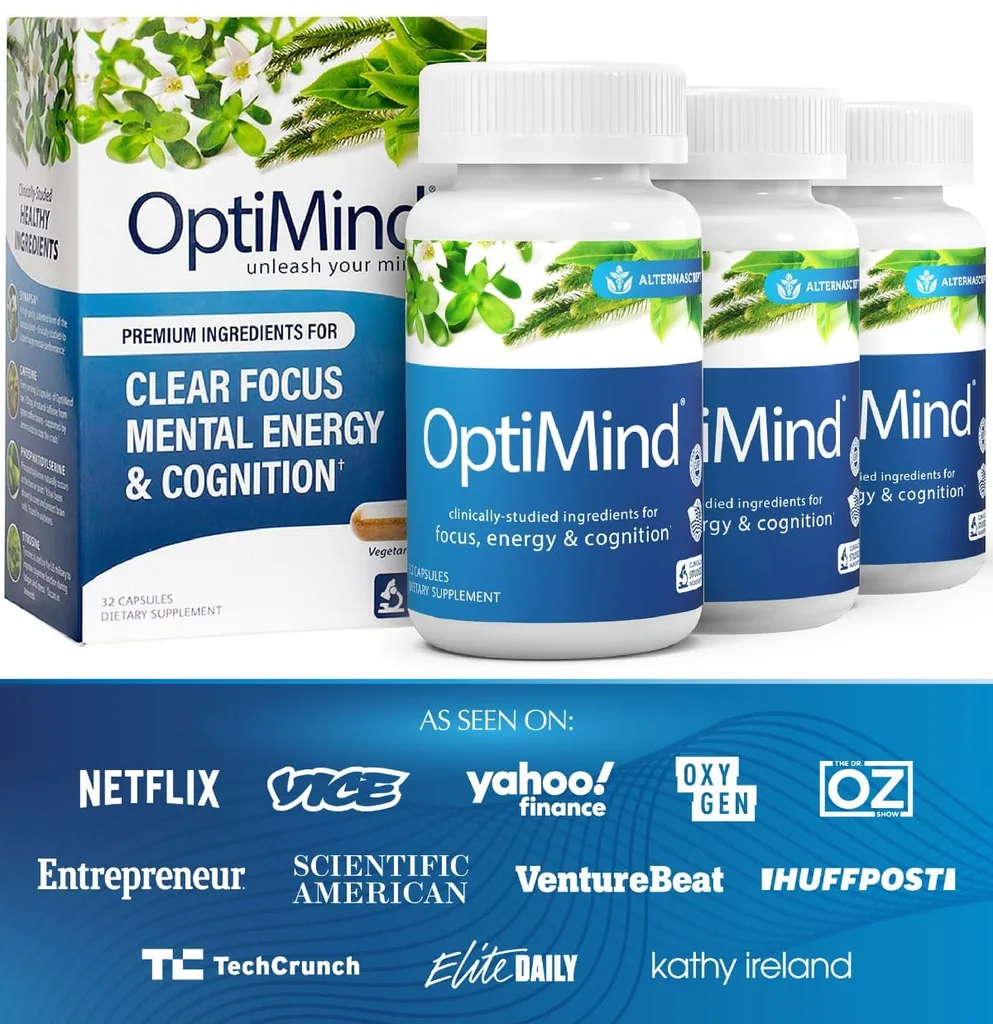
Its role is the same as the single bottle: support focus, mental clarity, information retention, and sustained daily energy. The product description also places emphasis on naturally sourced caffeine and a clean energy profile without the crash of high-stimulant products.
This pack makes sense when you are still testing your routine but want enough supply to judge consistency. A single morning can tell you how alert you feel. It cannot tell you much about slower ingredients or a repeated pattern across busy workdays.
Use the product's stated 1, 2 capsule daily range. Take it in the morning with water, and keep the rest of your caffeine intake in view. Coffee, energy drinks, tea, and pre-workout products all count toward your total exposure.
That tracking step matters because dosage labels often describe one product in isolation. A survey of 22 premium nootropic entries found that timing data appeared for fewer than half of the products. Many labels tell you how much to take but say little about when to take it.
Best choice for: someone who wants a consistent trial period and a middle ground between one bottle and a three-pack.
Do not treat the two-pack as permission to increase the serving. If one capsule feels adequate, there is no clear reason to move higher. If two capsules feel uncomfortable, stop and review the label with a clinician or pharmacist.
3. OptiMind® Brain Supplement — 1-Pack
The OptiMind® Brain Supplement , 1-Pack is the sensible starting point for a first trial. It costs USD 39.99 and is designed for people who want clear-headed focus support before buying a larger supply.
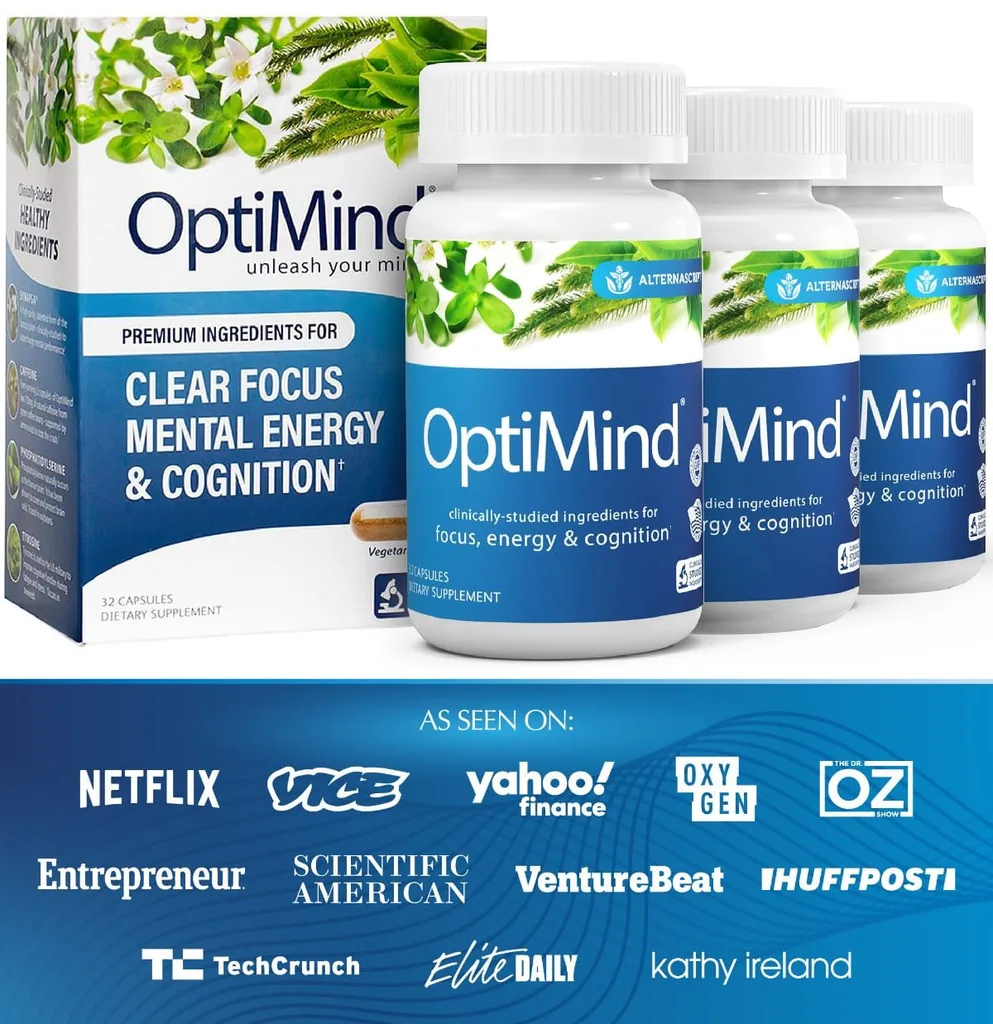
OptiMind is described as a daily nootropic for studying, work, or demanding days. Its stated benefits include sustained attention, mental clarity, healthy information retention, and clean energy from naturally sourced caffeine.
The listed use is 1, 2 capsules daily in the morning with a glass of water. Start with one capsule if you are sensitive to caffeine or are unsure how the formula will feel. Take notes on focus, mood, energy, appetite, and sleep for several days before changing the amount.
The one-pack is also the easiest way to avoid waste if you discover that caffeine does not suit you. No supplement should be judged by a single dramatic day. A calm, repeatable result is more useful than a sharp lift followed by poor sleep.
Best choice for: first-time users who want to test the stated serving before stocking up.
Keep the experiment clean. Do not begin OptiMind on the same day as several new supplements. If you change five things at once, you will not know what caused the good or bad result.
Nootropic Dosage Categories: Herbs, Nutrients, Stimulants, and Racetams
A useful nootropic supplement dosage guide starts by sorting ingredients into groups. The group tells you whether to think in micrograms, milligrams, or grams, and it also hints at timing and risk.
Herbs and plant extracts
Herbal compounds often support memory or stress response over time. Bacopa is commonly discussed as a slow-build memory ingredient. Rhodiola is studied for mental fatigue under stress. These products usually need consistent use rather than a one-time dose before a task.
Extract strength matters. “Bacopa” alone does not tell you how much active extract is present. Look for the plant name, extract form, and standardization when the label provides them. The Nootropic Ingredients Database gives studied ranges for ingredients such as Bacopa, Rhodiola, and Lion’s Mane, but those ranges are educational rather than personal prescriptions.
Nutrients and brain fats
Nutrients include compounds such as creatine, omega-3 fatty acids, magnesium, vitamin D, and B vitamins. Their dose styles vary widely. Creatine is often discussed in grams, while vitamin D uses international units and should be guided by health status and lab results.
Creatine is a good example of why a milligram-only mindset fails. The research context cites 5 g per day for cognitive use, while a separate dosage survey included compounds measured below 10 mg. Those numbers are not competing targets. They belong to different ingredients.
Stimulants
Caffeine increases wakefulness and can sharpen short-term focus. It also has a clear downside for some people: anxiety, restlessness, or lost sleep. If coffee already makes you feel tense, adding a caffeine-based nootropic may push you past your useful range.
OptiMind uses naturally sourced caffeine as part of a broader formula. That does not make caffeine-free behavior irrelevant. Count your other sources, then keep the product in the morning window.
Racetams and other synthetic compounds
Racetams are a separate category from ordinary food-based nutrients. Piracetam is listed in the research context at 4.8 g with timing of two to three doses per day. Aniracetam is listed as a fat-soluble compound taken with a meal, with a possible early period of mental fogginess.
These examples show why copying a dose from one compound to another is unsafe. A dose is tied to the ingredient, its form, the study population, and the person's health. A review of nootropic stack dosage entries also lists cautions for compounds such as caffeine, Alpha-GPC, Noopept, and Adrafinil. Treat such figures as reference points, not instructions to self-prescribe.
Ingredient Dosage Ranges and Personalized Serving Adjustments
Ingredient ranges can help you read a label, but they cannot replace a personal review. A serving that fits one person may be wrong for someone who takes medication, has a health condition, is pregnant, or is nursing.
Across the surveyed entries, the recorded spread ran from 1 mg to 750 mg. The median was 100 mg, while the average was 175 mg. That gap tells you the average is pulled upward by larger doses. It does not describe a universal serving.
Use the label before the calculator
Start with the serving printed on the product. Check whether the amount applies to one capsule or the full serving. Then check whether a proprietary blend hides individual amounts. A blend total is less useful when you cannot see how much of each active it contains.
OptiMind's current product information states a 1, 2 capsule daily range for the 1-Pack. The product page also describes a morning serving. That is more useful than a vague claim about taking a “proprietary focus blend,” because you have a defined starting point.
Adjust only one variable
If a product allows a range, begin at the lower end. Keep that amount steady while you track the same few measures:
- How long you can work before your attention breaks.
- Whether you feel calm or overstimulated.
- How easily you fall asleep.
- Any headache, nausea, dizziness, or stomach change.
Change one variable at a time. If you raise the serving and add coffee on the same day, the result is hard to read. Give your body enough time to show a pattern, especially when the formula contains ingredients intended for longer-term use.
Use extra care with lab-linked nutrients
Vitamin D is a clear example. Dosage should reflect blood levels, sun exposure, diet, age, and medical advice. A high dose is not automatically better, and a normal dose on a bottle may not fit a person with deficiency or excess.
The same caution applies to B vitamins and magnesium when a deficiency is suspected. Testing can answer a better question than guessing: is there a shortfall worth correcting? Ask a health professional which labs make sense for your situation.
Personalization should reduce risk, not justify bigger servings. If you have a diagnosis or take prescription medicine, review the full ingredient list before starting.
Safety, Side Effects, Timing, and Basic Stacking Principles
The safest nootropic supplement dosage guide is conservative about stacking. Start with one formula, use it at the stated serving, and watch what happens before adding another active. For a more structured approach to combining ingredients, review how to build a nootropic stack around one clear goal at a time.
Timing comes before quantity
Take caffeine-containing products early enough to protect sleep. OptiMind's product information places its serving in the morning. That fits the basic rule: use alertness ingredients when you need alertness, not late in the day because the morning was busy.
Fat-soluble ingredients may be better suited to a meal, while some products can be taken with water. The label should guide the first trial. Do not assume every capsule works best on an empty stomach.
Know the common warning signs
Stop and reassess if you develop strong anxiety, repeated headaches, nausea, dizziness, palpitations, or sleep disruption. A symptom is not proof that a product is harmful, but it is a good reason to pause rather than push through.
The research context lists possible mental fogginess with Aniracetam, vivid dreams with Noopept, and potential liver concerns with Adrafinil. It also lists several possible adverse effects for Alpha-GPC, including headache, fatigue, nausea, dizziness, and low blood pressure. These are reasons to avoid casual experimentation.
Do not stack blindly. Caffeine plus coffee plus an energy drink is still a caffeine stack. A racetam plus a choline compound is still a multi-ingredient experiment. Write down every active before you decide that a combination is “simple.”
When professional advice is the right move
Speak with a clinician or pharmacist before use if you are pregnant, nursing, managing a medical condition, or taking medication. Ask about interactions rather than relying on a label's general safety language.
Keep a basic log for two weeks when testing a new routine. Record the serving time, sleep quality, focus, and side effects. That record gives you something useful to discuss if a problem appears.
FAQ
What is the best starting dose for a nootropic supplement?
The best starting dose is the lowest serving stated on the product label. For OptiMind, the listed range is 1, 2 capsules daily in the morning. Start with one capsule if you are sensitive to caffeine, then track sleep and focus before changing anything. A lower, repeatable serving is easier to judge than a large first dose.
Can I take OptiMind twice a day?
OptiMind's stated guidance is 1, 2 capsules daily in the morning, so do not split it into a second daily serving unless a qualified professional advises you. The formula contains naturally sourced caffeine. A later serving could affect sleep, even if you do not feel stimulated right away.
How long does it take for nootropics to work?
Some nootropics can affect alertness within the same day, while memory-focused ingredients may need consistent use over several weeks. Caffeine is a fast-acting example. Bacopa is commonly treated as a slower-build ingredient. Judge each active on its stated purpose instead of expecting every capsule to feel immediate.
Is it safe to stack nootropic supplements?
Stacking can be risky when you cannot track total stimulant exposure or ingredient interactions. Start with one formula and keep the serving modest. If you add anything later, change only one ingredient at a time. Get professional advice first if you take medicine, are pregnant or nursing, or have a health condition.
Should I take nootropics with food?
Follow the product label because the best timing depends on the ingredients and their form. OptiMind is intended for a morning serving with water, while some fat-soluble compounds are commonly taken with a meal. Food may also reduce stomach upset for certain ingredients. Do not assume an empty stomach is always better.
Conclusion
Choose the OptiMind 1-Pack if you are testing the routine, the 2-Pack if you want a longer trial, or the 3-Pack if daily use is already part of your plan. Start at the stated morning serving, track your response, and review the full label with a health professional if you have medical concerns.
These statements have not been evaluated by the Food and Drug Administration. This product is not intended to diagnose, treat, cure, or prevent any disease.