Creatine is one of the most researched supplements there is, and almost all of that research was done on one form: creatine monohydrate. Creatine HCl arrived later with a promise of smaller doses and less bloating, at a higher price. This guide looks at what is known about each so you can decide which is worth your money.
The short answer
Creatine monohydrate is the form with decades of human studies behind it, and it is the least expensive. Creatine HCl dissolves more easily in water, but there is little human evidence that it works better or that a smaller dose does the same job. For most people monohydrate is the sensible choice. HCl is a reasonable alternative if monohydrate upsets your stomach.
| Monohydrate | HCl | |
|---|---|---|
| What it is | Creatine bound to a water molecule | Creatine bound to hydrochloric acid |
| Human research | Hundreds of studies | A handful |
| Usual daily amount | 3 to 5 g | Often marketed at 1 to 2 g, without strong evidence |
| Solubility in water | Moderate; micronized mixes better | High |
| Cost per serving | Low | Higher |
Why monohydrate is the reference form
When a study reports a result for creatine, it almost always means creatine monohydrate at 3 to 5 grams a day. That is the form whose safety and effects have been tested in thousands of participants over many years. Every other form is compared against it, and none has been shown to outperform it.
Monohydrate's one real drawback is practical: it does not dissolve perfectly in cold water. Micronized monohydrate, which is ground to a finer particle, mixes more easily and is otherwise the same thing.
What HCl changes, and what it does not
Creatine HCl is far more soluble, so it disappears into a glass of water. From that, marketers argue that it is better absorbed and that a much smaller dose is enough. The solubility is real. The rest has not been demonstrated in good human trials. Monohydrate is already very well absorbed, so there is not much room to improve.
Where HCl can help is comfort. A small number of people get stomach upset from monohydrate, especially at larger amounts, and some of them tolerate HCl better.
The bloating question
Creatine draws water into muscle cells. That is part of how it works, and it can show up as a pound or two on the scale in the first weeks. It is water inside muscle, not under the skin. This happens with any form that raises your creatine stores, so a form that causes none of it is probably not raising your stores much either. Skipping the optional high-dose loading week and taking a steady 3 to 5 grams a day keeps it gradual.
How much to take
- Daily amount: 3 to 5 g of creatine monohydrate.
- Loading: optional. A steady daily amount fills your stores in about three to four weeks without it.
- Timing: does not appear to matter. Take it when you will remember.
- With: water, juice or a shake. It has no taste when unflavored.
People with kidney conditions, and anyone taking medication that affects the kidneys, should talk to a healthcare professional before using creatine.
What to look for on the label
- The words "creatine monohydrate" and the grams per serving.
- One ingredient. Creatine does not need a blend around it.
- A scoop that delivers 3 to 5 g, so you are not guessing.
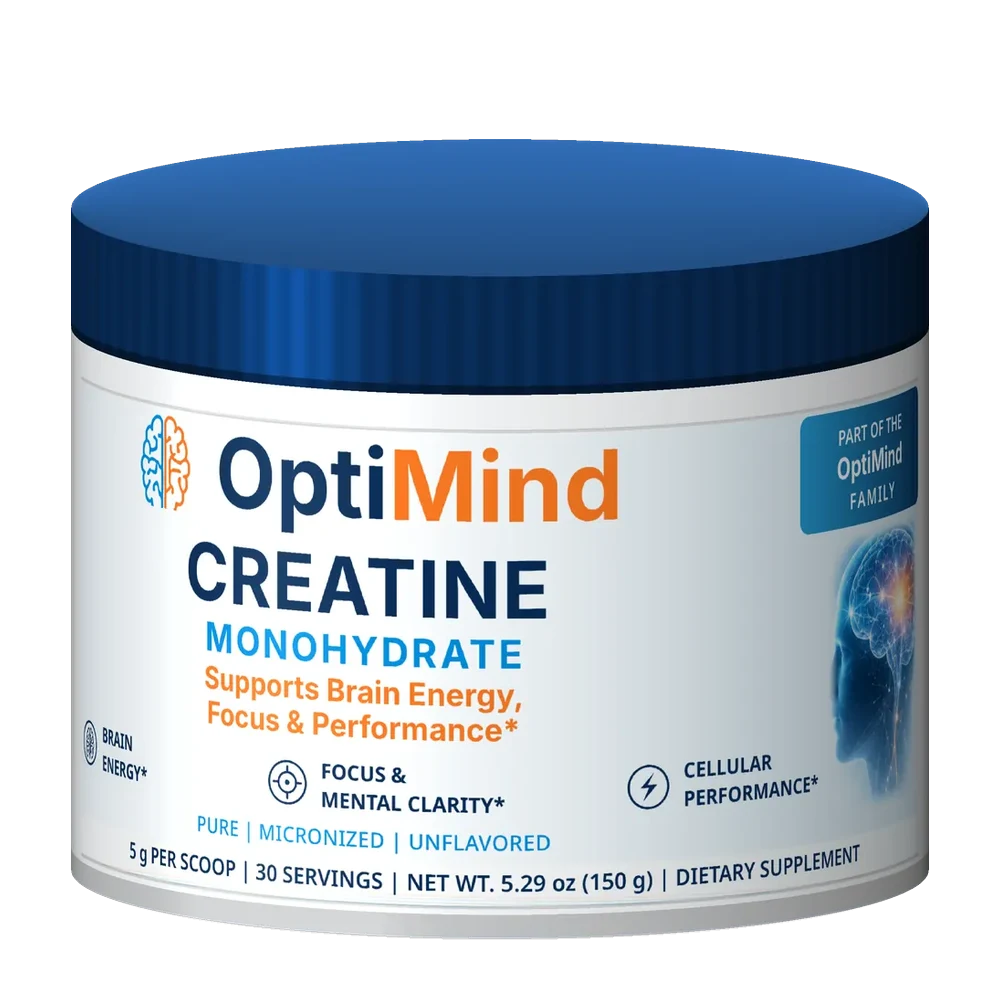
OptiMind Creatine is the plain version: 5 g of micronized creatine monohydrate per scoop, unflavored, one ingredient, 30 servings.
Creatine is also being studied for its role in the brain's energy supply. Our guide to creatine for brain health covers what that research does and does not show, and how to build a nootropic stack explains where it fits beside a focus formula.
FAQ
Is creatine HCl better than monohydrate?
There is no good human evidence that it is. HCl dissolves better. Monohydrate has far more research and costs less.
Do you need less creatine HCl than monohydrate?
That is the marketing claim, but it has not been established in well-run trials. The amounts with evidence behind them are 3 to 5 g a day of monohydrate.
Does creatine monohydrate cause bloating?
It can add a little water weight inside muscle in the first weeks. Taking a steady daily amount with no loading phase keeps this modest.
Is micronized creatine different from monohydrate?
No. It is creatine monohydrate ground finer so it mixes more easily.
Do I need to cycle creatine?
Studies use it continuously, and there is no evidence that cycling is needed.
The bottom line
Buy creatine monohydrate, take 3 to 5 grams a day, and give it a few weeks. Consider HCl only if monohydrate does not agree with your stomach, and be skeptical of any form that costs more and promises to do the same job with less.
These statements have not been evaluated by the Food and Drug Administration. This product is not intended to diagnose, treat, cure, or prevent any disease. Talk to a healthcare professional before starting a new supplement, particularly if you are pregnant, nursing, taking medication or managing a health condition.