You may have come across this age-old adage, “Work smarter, not harder.”
So, why not extend the same philosophy to other aspects of your life?
Are you in a situation wherein, no matter how much you exercise, eat healthily, and sleep well, you still struggle to focus and motivate yourself?
If so, it's worth understanding what your options actually are — and what the research does and doesn't support.
Welcome to the world of nootropics.
Below, we walk through what the term means and look at ten of the most widely discussed nootropic compounds — including which are available as dietary supplements and which are prescription-only medications that are not supplements at all.
What are Nootropics?

Nootropics, sometimes called ‘brain boosters,’ ‘brain supplements’ or ‘cognitive enhancers,’ is an umbrella term covering a wide range of synthetic and naturally occurring compounds.
The category is broad and uneven: it includes dietary supplement ingredients, everyday compounds like caffeine, and prescription medications. They are not interchangeable, and they are not all things you can simply “try.”
Research in this area looks at mechanisms such as cerebral blood flow, neurotransmitter activity, synaptic function, and cell membrane composition. The quality of evidence varies enormously from one compound to the next, and much of it comes from small or short studies.
Interest in the category has grown into a large consumer market. A 2014 U.S. survey reported that more than 18% of sophomores, juniors, and seniors at Ivy League colleges had used a stimulant at least once during their academic years.
If you're new to the topic and trying to make sense of conflicting information online, our plain-English explainer on what nootropics are and how the main types work is a good place to start, and our guide to building a nootropic stack covers how people combine them.
Here are ten of the most discussed nootropic compounds and what the research actually says about each.
1. Modafinil — A Prescription Medication, Not a Supplement
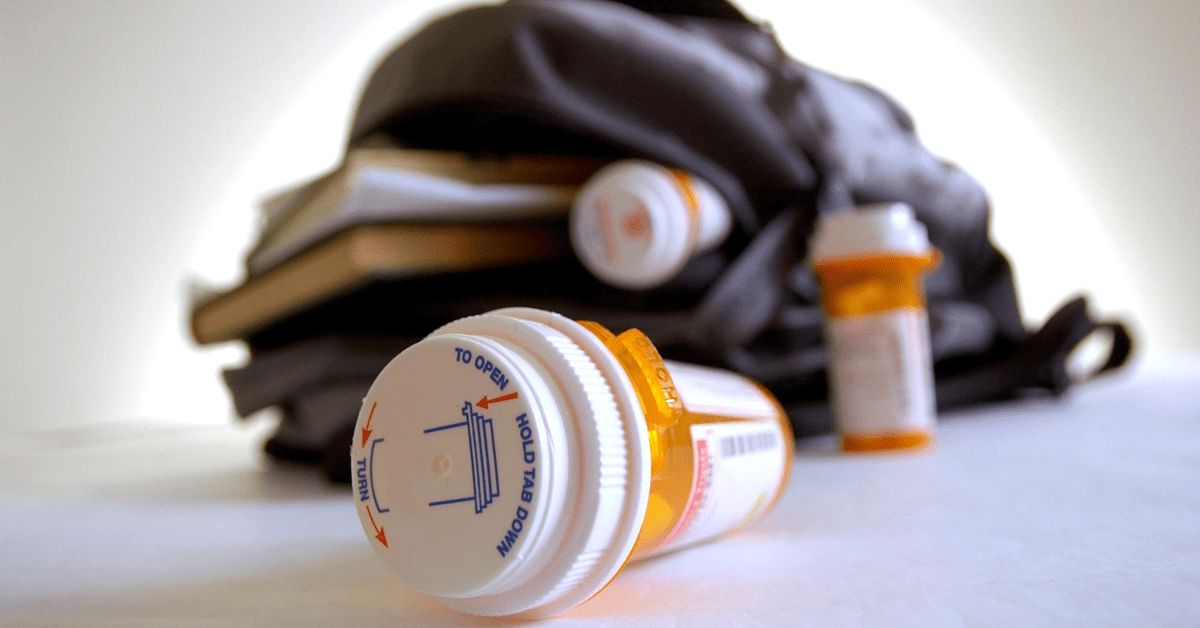
Modafinil is one of the most frequently discussed compounds in nootropic conversations — but it is important to be clear about what it is. Modafinil is a prescription-only medication regulated as a drug, not a dietary supplement.
It is prescribed by physicians for specific medically diagnosed conditions, and it is available only with a prescription and under medical supervision.
Research on healthy adults has examined effects on alertness, reaction time, and vigilance, particularly under sleep deprivation. Findings are mixed and the long-term picture is not well established.
Because it is a regulated medication, off-label use carries real risks, including the potential for misuse. It is not something we recommend anyone obtain or take outside of a prescribing relationship with their own doctor.
We include it here for completeness, because you will see it discussed everywhere in this category — not as a suggestion to use it.
Source: Vassar College Libraries
2. Caffeine — The Most Commonly Used Nootropic

Caffeine, in the form of coffee or tea, is the most widely used nootropic in the world and has been for centuries.
Today it also comes in capsule and powder form, and as an ingredient in focus and energy supplements.
Long-term observational research has looked at habitual coffee consumption and cognitive aging. These studies show associations only — they cannot establish cause and effect, and the findings are mixed.
Caffeine's alertness effect is real but short-lived, and regular users typically develop tolerance, which is one reason daily intake is worth keeping in check.
The FDA considers up to about 400 mg of caffeine a day — roughly four cups of coffee — to be a reasonable ceiling for most healthy adults. Above that, side effects such as restlessness, jitteriness, nausea, and disrupted sleep become more likely.
This is one reason many people pair caffeine with L-theanine rather than taking it alone. Our write-up on why L-theanine and caffeine are so often combined covers the research and the usual ratio, and nootropics vs. coffee compares the two approaches directly.
If you'd rather avoid stimulants altogether, see our roundup of caffeine-free options for steady energy.
OptiMind is a caffeine-containing nootropic supplement formulated for healthy adults. It is not intended for children or teenagers, and anyone sensitive to caffeine should account for it alongside other sources in their day.
Source: Harvard Medical School
3. L-Theanine — The Calm-Focus Amino Acid

L-theanine is an amino acid found naturally in green and black tea, and it appears in many focus supplements.
It has been studied for its role in supporting a calm, relaxed but alert mental state — the reason it is so often described as “calm focus.”
Research has looked at its effects on attention and subjective relaxation, and at how it may help take the edge off caffeine's sharper effects. Some work has examined gene expression in regions associated with memory and stress response, though this is early-stage.
L-theanine is generally well tolerated. As with any supplement, larger amounts can cause stomach upset or irritability in some people.
Anyone who is pregnant or nursing, taking prescription medication, or under a doctor's care for any reason should talk to their healthcare provider before adding L-theanine or any supplement.
Source: PennState World Campus
4. Bacopa Monnieri — The Most-Studied Botanical Nootropic

Known widely as ‘Brahmi,’ Bacopa monnieri or water hyssop is a small herb native to India with a long history of traditional use, and it is referenced in Ayurvedic texts as a botanical associated with memory.
It is among the more thoroughly studied botanicals in this category, with human research going back decades.
A study published in Neuropsychopharmacology in 2002 reported effects on the rate of forgetting newly acquired information, memory consolidation, and verbal learning in healthy adults.
Other work has examined attention and mood in older adults, and has looked at bacopa's effects on acetylcholine-related enzyme activity as a possible mechanism.
Bacopa is generally well tolerated, though it can cause nausea or digestive upset in some people, particularly on an empty stomach. It is also slow-acting: most studies run 12 weeks, which is the realistic timeframe to judge it on.
Our deeper dive on what the bacopa research actually shows walks through the trials in detail.
Bacopa monnieri is one of the ingredients in OptiMind, where it appears as the standardized Synapsa® extract.
Source: US National Library of Medicine
5. Creatine — The Well-Known Compound With a Cognitive Side

Creatine is a compound the body produces itself, synthesized in the kidneys, liver, and pancreas.
It is stored largely in muscle tissue, with a smaller pool in the brain, where it plays a role in cellular energy metabolism.
Athletes have used creatine supplements for decades to support training capacity and recovery. More recently, researchers have looked at its cognitive side.
That research has examined mental performance in sleep-deprived adults and performance on cognitively demanding tasks, with some studies suggesting effects are most noticeable when the brain is under metabolic stress — sleep deprivation, or in people with low dietary intake such as vegetarians.
Creatine is one of the best-characterized supplements on the market for safety. Higher doses can cause gastrointestinal discomfort and short-term water weight gain.
Our overview of creatine and cognitive performance covers what the evidence supports and where it stops.
Source: CiteSeerX
|
Looking for a nootropic supplement built on clinically studied ingredients? Take a look at OptiMind.
Formulated to support focus, memory, and clean daily energy in healthy adults. |

6. Armodafinil — Also Prescription-Only
Armodafinil, sold under the brand name Nuvigil, is closely related to modafinil. Like modafinil, it is a prescription-only medication, not a dietary supplement.
It is prescribed by physicians for specific diagnosed conditions and is available only under medical supervision.
It appears frequently in online nootropic discussions, which is why we mention it — but it is not a supplement, and we do not suggest seeking it out for cognitive performance.
Reported side effects include headache, nausea, dry mouth, dizziness, anxiety, and nervousness, and more serious effects are possible. Anyone considering it should be doing so in conversation with their own physician.
Source: Duke University
7. Alpha Lipoic Acid — The Antioxidant Compound

Alpha lipoic acid is a vitamin-like compound with antioxidant properties that occurs naturally in foods including broccoli, spinach, organ meats, yeast, and potatoes.
One reason it draws interest in this category is that it crosses the blood-brain barrier, making it relevant to research on antioxidant activity in nervous tissue.
It also participates in the body's antioxidant network, where it has been studied for its role in helping regenerate other antioxidants such as vitamins C and E.
Research has examined its relationship to oxidative stress and to nerve tissue, and its role in acetylcholine synthesis — the neurotransmitter most closely associated with focus and learning.
As with much of this category, the human evidence is still developing and shouldn't be overstated.
Our article on alpha lipoic acid and the brain goes into the research in more depth, and how to support acetylcholine naturally covers the wider picture.
Alpha lipoic acid is one of the ingredients included in OptiMind.
Source: Alzheimer's Drug Discovery Foundation
8. Sulbutiamine — A Fat-Soluble Vitamin B1 Derivative

Sulbutiamine is a lab-made derivative of vitamin B1 (thiamine), created by linking two thiamine molecules to make the compound fat-soluble.
That fat solubility is the point: it crosses the blood-brain barrier more readily than standard thiamine, which is why it has been studied in the context of mental energy.
Research has looked at subjective mental fatigue and at markers of memory and attention, though the body of human evidence is small compared with better-studied compounds.
Some work has examined its interaction with cholinergic and glutamatergic signaling as a possible mechanism.
Anyone taking prescription medication or under a doctor's care should speak with their healthcare provider before using it.
Our write-ups on sulbutiamine and on vitamin B1 and mental energy cover both in more detail.
Source: US National Library of Medicine
9. GABA — The Brain's Calming Neurotransmitter

Gamma-aminobutyric acid, or GABA, is the brain's primary inhibitory neurotransmitter, produced naturally from glutamate.
Its role is to dial down neural excitability — the counterweight to the brain's excitatory signaling, and part of what underlies a settled, unhurried mental state.
EEG research has examined shifts in alpha and beta wave activity following GABA intake, which is often discussed in relation to a relaxed but alert state.
An honest caveat matters here: whether orally supplemented GABA crosses the blood-brain barrier in meaningful amounts is genuinely debated, and the evidence is mixed. Anyone telling you it's settled is overselling it.
Our overview of what GABA supplements can and can't do walks through that debate.
GABA is one of the ingredients in OptiMind.
Source: US National Library of Medicine
10. Alpha GPC — A Choline Source That Reaches the Brain

L-alpha glycerylphosphorylcholine, also called choline alfoscerate or Alpha GPC, is a naturally occurring choline compound found in small amounts in the body and in foods such as dairy, wheat germ, and organ meats.
Because dietary sources supply only small quantities, it is usually taken as a supplement.
Its appeal is mechanistic: it is an efficient choline donor that crosses the blood-brain barrier, and choline is the raw material for acetylcholine, the neurotransmitter most associated with memory and focus.
Research has examined its effects on memory and attention in both younger and older adults, and it is often combined with other compounds in a stack.
Reported side effects include headache, heartburn, dizziness, skin rash, insomnia, and confusion, particularly at higher doses.
How to Choose Between Them
Those are ten of the most-discussed nootropic compounds. A few principles worth holding onto:
Two of the ten — modafinil and armodafinil — are prescription medications and belong in a conversation with your doctor, not a shopping cart. The rest are available as dietary supplements.
Evidence quality varies widely. Bacopa, caffeine, L-theanine, and creatine have the deepest human research behind them. Others are earlier-stage.
Dose matters as much as ingredient. A formula that lists a well-studied ingredient at a fraction of the studied dose isn't delivering what the research looked at. Our nootropic dosage guide covers what to look for on a label.
If you're comparing specific products rather than ingredients, our honest side-by-side of OptiMind vs Alpha BRAIN vs Mind Lab Pro and our roundup of the best nootropics for focus and energy are the practical next reads.
And if you have a health condition, take prescription medication, or are pregnant or nursing, talk to your doctor before starting any supplement. That isn't boilerplate — interactions are real.
Where OptiMind Fits
OptiMind is a nootropic supplement formulated for healthy adults, built around clinically studied ingredients including Synapsa® bacopa monnieri, L-tyrosine, taurine, GABA, huperzine A, alpha lipoic acid, and vitamins D, B1, and B12.
It is designed to support focus, memory, and steady daily mental energy — and it contains caffeine, which is worth knowing if you are sensitive to it or already getting caffeine elsewhere in your day.
You can read exactly what's in it, ingredient by ingredient, in OptiMind ingredients explained, or see how to take it.
Not intended for use by anyone under 18, or by those who are pregnant or nursing.
These statements have not been evaluated by the Food and Drug Administration. This product is not intended to diagnose, treat, cure, or prevent any disease. This article is for general educational purposes and is not medical advice. Consult your physician before beginning any supplement, particularly if you have a medical condition, are taking medication, or are pregnant or nursing.