The best supplement for studying should help you stay focused without leaving you wired at midnight. Yet many products give little detail about stimulant doses or clinical support. OptiMind is our top pick because it targets studying and focus, lists clinically studied ingredients, and is described as having low crash potential. Use the steps below to judge the label before you buy.
1. OptiMind (Our Top Pick)
OptiMind is a nootropic brain supplement made for clear thinking, longer focus, and clean energy. It fits students, professionals, medical staff, and anyone who needs steady mental output during a long work block.
Our review of 23 supplement entries found that OptiMind was the only product marked for “Studying, focus” while also listing clinically studied ingredients and low crash potential. That combination matters because a study aid has to fit the task. A product aimed at general mood or broad brain health may not match a four-hour reading session.
OptiMind also gives you a clearer way to assess the product. The brand describes its formula as containing 12 clinically studied ingredients. It positions the product around sharp focus and crash-free mental energy, rather than asking you to guess what a vague “brain blend” might do.
Start with the OptiMind® Brain Supplement 1-Pack if you want to test one product before buying more. Read the full label first. Check the serving directions. Then use the same study block for several sessions so you can judge whether your focus feels more stable.
That last part is important. A supplement can't replace sleep, food, water, or a study plan. It may support the work, but the work still comes from you. If you feel restless, get a headache, or notice poor sleep, stop and reassess instead of pushing through.
OptiMind is the strongest fit in this comparison because its stated evidence and use case line up with the question. It still deserves the same safety check as any dietary supplement.
Step 2: Check the Ingredients for Focus and Mental Clarity
The best supplement for studying starts with a label you can read. Look for named ingredients instead of a single proprietary blend that hides the amount of each compound.
Common ingredients in this category include L-Tyrosine, Bacopa monnieri, L-theanine, citicoline, phosphatidylserine, rhodiola, lion’s mane, and caffeine. They don't all work the same way. L-Tyrosine is an amino acid linked with neurotransmitter production. Bacopa is a botanical often studied for memory. L-theanine is used in many focus formulas because it may support a calmer form of attention. For a broader comparison of how different compounds may fit focus and energy goals, see nootropics for focus and energy.
Citicoline supplies compounds involved in brain cell membranes and neurotransmitter activity. Phosphatidylserine is a type of phospholipid found in cell membranes. Rhodiola is an adaptogenic herb, which means brands use it to help the body respond to stress. These short definitions help you spot what a label is trying to do, but they don't prove that a finished product will improve your next exam session.
Ingredient quality also depends on context. Ask four questions:
- Is the ingredient named clearly?
- Is the amount shown per serving?
- Does the product state whether the ingredient has been studied?
- Does the label disclose caffeine or other stimulants?
Some evidence is ingredient-specific rather than product-specific. A study on Bacopa doesn't prove that every Bacopa capsule works the same way. The extract type, serving amount, study length, and other ingredients can change the result.
Look at the exact formula and study design instead of relying on an ingredient name alone. A study may measure memory after weeks of use, while you may want alertness during today's lecture.
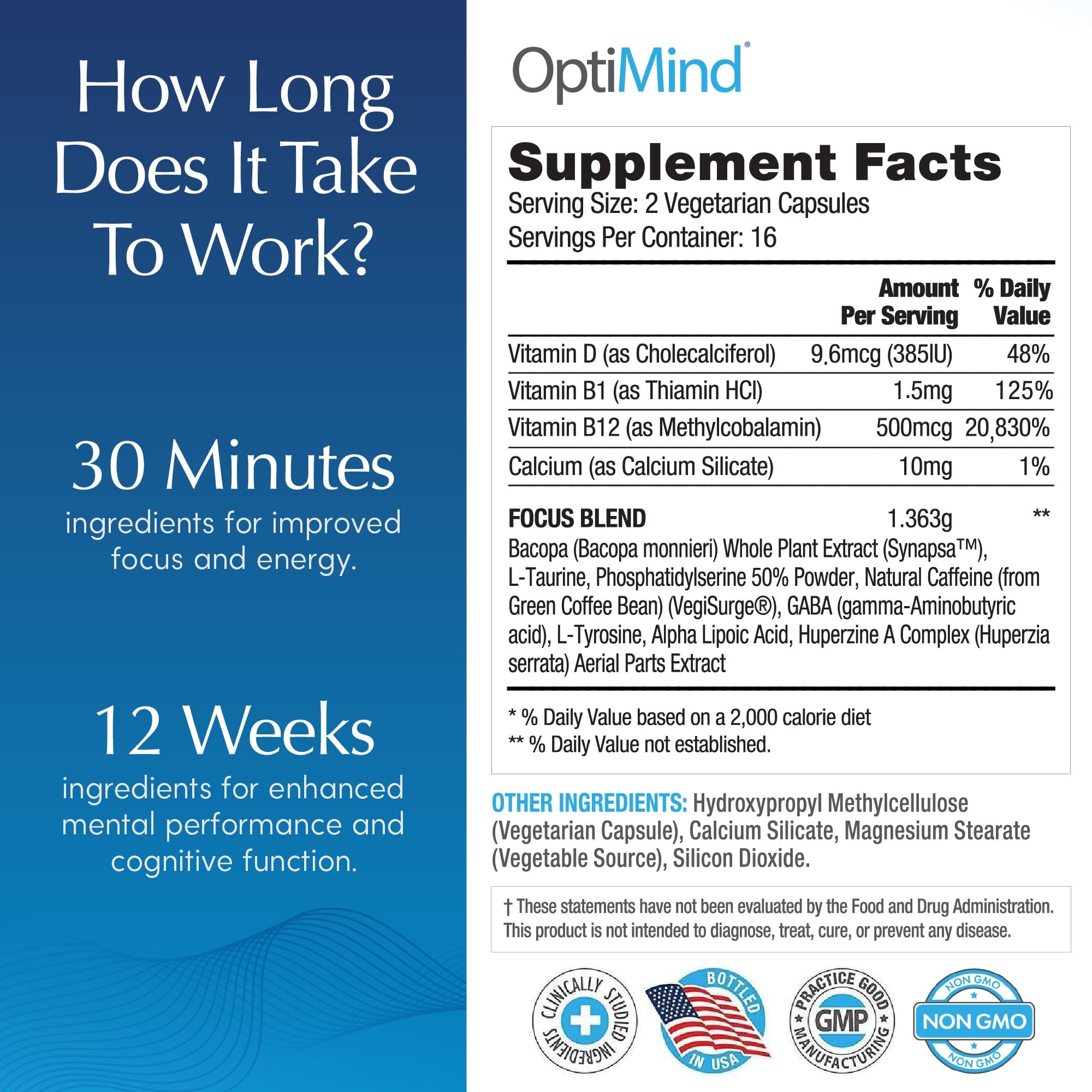
OptiMind's stated formula includes 12 clinically studied ingredients, but the useful question remains the same: can you see the full facts panel and follow the serving directions? A clear label lets you compare the product with your current coffee intake or any other supplement you use.
Use the label as a filter, not a promise. If a product hides the key details, move on.
Step 3: Separate Clinically Studied Ingredients From Marketing Claims
To find a sound study aid, separate a research claim from a sales phrase. “Clinically studied” means research exists on an ingredient or formula. It doesn't mean the product will make you smarter or fix poor sleep.
Look for the exact wording. A careful label may state that its ingredients have been clinically studied. A loose label may say “science-backed” without naming a trial, ingredient, or outcome. Those phrases are not equal.
Next, ask what the research measured. Cognitive studies may look at memory, attention, reaction time, mood, or mental fatigue. Those outcomes overlap, but they aren't interchangeable. A memory result may not tell you much about staying alert during a dull chapter.
Study length matters, too. Some compounds are discussed for longer-term use. Others are used around a specific focus window. If a product promises an instant effect from an ingredient mostly studied over several weeks, treat that promise with care.
In the research set used for this article, 12 of 23 entries had some form of clinically studied evidence. Only seven gave a simple “Yes” in the evidence field. That leaves a wide gap between having research somewhere and explaining what the research means for the buyer.
One useful example is phosphatidylserine. A peer-reviewed record about phosphatidylserine research in PubMed can help you see the difference between a studied compound and a broad product promise. The paper is evidence about the compound. It is not a guarantee for every blend that contains it.
Apply the same test to Bacopa or L-Tyrosine. Some compounds are studied for their effects on neurotransmitters involved in memory and learning. That description can explain why an ingredient appears in a formula. It cannot tell you whether more is better, or whether you should combine it with another product.
Before you trust a claim, write down:
- The ingredient being studied.
- The outcome measured.
- The time period used.
- Whether the study tested the finished product.
You can also read OptiMind Ingredients Explained to see how the brand frames its formula. Keep your standards consistent. A brand page can explain ingredients, while independent research helps you judge the strength of the claim.
The best choice is usually the one that makes fewer promises and gives you more usable detail. Evidence should narrow your options, not replace your judgment.
Step 4: Evaluate Energy, Caffeine, and Crash Risk
Energy can help you study, but the best supplement for studying should not trade one good hour for a poor night of sleep. Start by checking caffeine content and the timing of your study block.
In the 23 products reviewed for this article, only one entry disclosed a caffeine amount. That product listed 100 mg. The finding points to a basic transparency problem: without a stated amount, you can't compare a supplement with coffee, tea, energy drinks, or pre-workout products.
“Low crash” also needs a careful reading. Crash risk can depend on stimulant dose, your tolerance, whether you take the product with food, and when you use it. A person who drinks coffee all day may react differently from someone who rarely uses caffeine.
The same applies to sleep. A late study session may feel productive while the supplement is active, but lost sleep can hurt your next day. Keep stimulants away from your normal bedtime when possible. If you study at night, consider whether you need energy at all, or whether you need a quieter way to reduce distraction.
Under US rules, dietary supplements are regulated differently from medicines, and manufacturers generally don't need government approval before selling a supplement as they would for an approved drug. That makes label review and personal caution especially important.
Build a simple energy check:
- Write down your normal caffeine intake.
- Take only the label-directed serving.
- Use it during a planned focus block.
- Record alertness, jitters, mood, and sleep that night.
Don't stack several new stimulants at once. If your heart races, anxiety rises, or sleep worsens, stop and speak with a qualified health professional. People who are pregnant, take medicine, or have a health condition should ask a clinician before using a nootropic.
OptiMind is positioned around clean, crash-free mental energy and low crash potential. Treat that as a product claim to test against your own response, not as a reason to ignore sleep or safety.
Step 5: Match the Supplement Format and Serving Plan to Your Routine
The best supplement for studying is one you can use as directed without turning your day into a dosing puzzle. Match the format to your schedule first.
Capsules suit a fixed morning routine. Powders may work for someone who already mixes a drink before a study block. Gummies can feel easy to take, but ease doesn't tell you anything about evidence or stimulant content. Pick the format you will use consistently, then inspect the label just as closely.
Next, choose one daily anchor. That might be breakfast, the start of a library session, or the first work block. Taking a supplement at a random time makes it hard to compare one day with the next.
Don't change five things at once. Keep your coffee intake steady. Use the same rough workload. Note whether you read, write, solve problems, or attend a long class. Different tasks may expose different strengths and weak points.
A simple log can include:
- Time taken.
- Task started.
- Minutes before distraction.
- Perceived focus from 1 to 5.
- Sleep quality that night.
These notes won't prove a clinical effect. They can show whether the product fits your routine. If you keep forgetting a capsule, the formula may be a poor operational fit even if the ingredient list looks good.
OptiMind provides several pack choices. A single bottle makes sense for a first trial. The OptiMind focus collection can help you review the brand's focus products in one place, but don't buy a larger supply until you know you tolerate the formula.

Use the same day, the same workload when you compare results. That simple rule gives you a cleaner signal than chasing a new formula every week.
Step 6: Choose a Transparent Option That Fits Your Study Goals
Now choose the product that gives you enough information for a fair trial. For this search, OptiMind is the clearest fit because its stated use case is studying and focus, while its formula is described as containing clinically studied ingredients with low crash potential.
Use a short decision rule. If your main problem is distraction during reading, focus should be the stated goal. If your main problem is poor sleep, a stimulant may be the wrong first move. If your diet is limited, a clinician may point you toward a nutrient rather than a nootropic blend.
Look at the public information before you pay. A strong product page should let you find:
- The full ingredient list.
- Serving directions.
- Caffeine or stimulant disclosure.
- Warnings and use limits.
- A clear statement about the intended use.
Our source comparison found that web-based pages supplied more ingredient and evidence detail than some direct product listings. Several listings gave a product name but little public information about efficacy or safety. That doesn't prove the product is unsafe. It does mean you have less data for a careful choice.
Be wary of a formula that tries to solve every problem at once. Claims about mood, memory, energy, sleep, gut health, and total brain health may sound appealing, but they make it harder to know what the product is built to do. A focused use case is easier to test.
Price also needs context. OptiMind's listed options include a 1-Pack at USD 39.99, a 2-Pack at USD 69.99, and a 3-Pack at USD 99.95. Start with the 1-Pack if you have never used it. The OptiMind® Brain Supplement 3-Pack may suit someone who already knows the formula fits their routine.
Don't judge a supplement by the word “premium.” Judge it by the details you can verify and the way it fits your day. A product that supports focus without disrupting sleep is more useful than one that makes you feel intensely alert for a short burst.
Finally, ask a pharmacist or clinician about interactions if you take prescription medicine or have a health condition. Stop if you develop a concerning reaction. The goal is clear work that you can repeat, not a dramatic feeling that fades before the assignment is done.
FAQ
What is the best supplement for studying?
OptiMind is our top pick for studying because it targets focus, lists 12 clinically studied ingredients, and is described as having low crash potential. No supplement works the same way for everyone. Check the label, follow the serving directions, and track focus alongside sleep before deciding if it belongs in your routine.
Do nootropics help with studying?
Nootropics may support focus or mental energy, but results depend on the ingredient, formula, dose, and person. Research on one compound doesn't prove that every blend will help. Use a nootropic as support for a sound study plan, not as a replacement for sleep, food, breaks, or medical care.
Should a study supplement contain caffeine?
A study supplement doesn't need caffeine to be useful, and caffeine can cause jitters or affect sleep. Check the exact amount before use. In the product review behind this guide, only one of 23 entries disclosed its caffeine content, which shows why stimulant transparency should be part of your buying decision.
What ingredients are good for focus and memory?
Ingredients often discussed for focus and memory include L-Tyrosine, Bacopa monnieri, L-theanine, citicoline, phosphatidylserine, rhodiola, and lion’s mane. Their evidence and timing differ. Read the finished product's full label because an ingredient's research does not guarantee the same result in every formula.
Can I take a brain supplement every day?
You may be able to take a brain supplement daily when the label allows it, but your health history matters. Follow the stated serving plan and avoid stacking several new products. Ask a clinician or pharmacist first if you take medicine, are pregnant, or have a condition that could affect stimulant safety.
Conclusion
OptiMind is the most direct match for a study aid because its stated focus, clinically studied ingredients, and low crash positioning address the needs that matter during long work blocks. Start with one pack, follow the label, and track focus plus sleep for several sessions. If the product doesn't fit your body or schedule, stop and ask a health professional what would be safer.